Key Takeaways
- A loose keeper can leave the tail unsupported and prone to snagging. Assess the whole fastening rather than assuming the loop alone explains the problem.
- Fixed loops are anchored near the buckle, often by stitching or the strap construction; floating loops can move to hold the tail.
- A damaged loop is a reason to inspect the rest of the strap; it does not by itself prove that every component has failed.
- Buckle removal is often necessary to slide on a replacement loop; consult a professional watchmaker if you lack appropriate tools or manufacturer guidance.
- If the strap tail regularly slips free during normal movement, stop wearing the watch until the keeper or strap is repaired or replaced.
A loose watch strap keeper might initially feel like a minor annoyance. You pull your watch strap through the buckle, slide the loop over the excess strap tail, and carry on with your day. Within minutes, however, the keeper slides backward, the tail springs open, and your strap begins snagging on shirt cuffs or desk edges. An unsupported tail can catch on clothing or equipment. Whether the fastening remains secure depends on its design and condition, so inspect it rather than diagnosing the risk from the loose loop alone.
Deciding whether to replace just the keeper or swap out the entire band depends on the construction of your strap, the condition of the remaining materials, and how the loops are anchored. This troubleshooting guide walks you through structural inspection, fixed versus floating loop mechanics, and clear criteria to help you decide your next steps safely.
Table of Contents
- Anatomy of Strap Keepers: Fixed vs Floating Loops
- Why a Loose Watch Strap Keeper Threatens Tail Retention
- Inspecting Broken Stitching, Delamination, and Wear
- Can You Replace Just the Keeper Loop?
- Critical Signs You Must Stop Wearing the Strap Immediately
- When to Replace the Whole Strap: Material-Specific Factors
- Safe Handling and When to Consult a Professional Watchmaker
- Frequently Asked Questions About Watch Keepers
Anatomy of Strap Keepers: Fixed vs Floating Loops
Most two-piece straps designed with traditional tang buckles rely on two distinct retention loops to manage the strap tail. Understanding how these loops function helps diagnose why a loose watch strap keeper has developed in the first place.
The first loop is known as the fixed keeper. In traditional leather and fabric bands, this loop is anchored directly adjacent to the buckle frame. It is trapped inside the folded leather section or secured by the main structural stitches that hold the buckle hardware in place. Because it cannot travel down the length of the band, its primary job is to constrain the strap tail immediately after it exits the buckle frame, preventing upward lifting.
The second loop is the floating keeper, sometimes called the running loop. This component is unanchored, designed to move along the buckle-side strap section so it can retain the overlapping tail after fastening. Floating keepers rely on internal friction against the strap body to stay in position. Over time, friction can diminish due to material compression, leather stretching, or natural wear. You can read more about foundational strap builds in our complete guide to leather watch bands.
When a fixed loop loosens, inspect how it is attached and whether adjacent stitching or material is also damaged. When a floating loop becomes loose, it slides freely toward the buckle or the watch case, leaving the loose tail flapping unsupported.

Why a Loose Watch Strap Keeper Threatens Tail Retention
A keeper loop does not simply tidy the appearance of your wrist. It serves an essential mechanical role in the security of a tang buckle closure. When you buckle a watch, the tongue passes through an adjustment hole, holding tension. The keeper helps manage the excess tail, but its role and the consequences of losing it depend on the buckle and strap design.
When you have a loose watch strap keeper, the floating loop fails to hold the strap tail firmly against the inner band. As you walk, reach into pockets, or move your arms, the unsecured tail acts as a lever. If the exposed tail catches on clothing, backpack straps, or furniture, the outward pulling force transfers directly to the buckle tongue.
If the tail repeatedly catches or the fastening shifts, stop wearing that combination and investigate. Do not use a general guide to judge how much force a particular assembly will withstand. Confirm that the original retention arrangement is restored and that the buckle and attachment remain sound.
Inspecting Broken Stitching, Delamination, and Wear
Before deciding whether a repair is feasible, take the watch off your wrist and place it on a clean, soft surface for a thorough tactile and visual inspection. Do not perform aggressive bend tests or pull on parts forcefully, as this can worsen structural damage.
Begin by checking the seam of the keeper itself. Most leather keepers are formed by joining two ends of a narrow leather strip with a tiny stitch or specialized bonding agent. Look closely at this joint:
- Has the small joining thread snapped, frayed, or unraveled?
- Is the glued lap joint separating, creating an opening in the loop circumference?
- Is the edge coating along the keeper peeling or gummy?
Next, inspect the main strap body. A keeper often stretches loose because the strap itself has thinned or compressed from moisture exposure, sweat, or repeated mechanical friction. Look at the primary stitching around the buckle area. If the threads holding the fixed keeper are loose or broken, the integrity of the buckle mount is compromised. In such scenarios, replacing a single loop does not resolve the structural hazard. If the leather around the buckle shows deep cracks, dryness, or delamination, browse fresh leather watch bands and straps to ensure your watch remains anchored reliably.

Can You Replace Just the Keeper Loop?
Replacing only the keeper loop is possible under specific conditions, but it is not always a simple operation. The primary consideration is whether the damaged loop is the fixed or the floating keeper, and what material your strap is made of.
If the failed component is a floating keeper, replacement is relatively straightforward if you can source a compatible loop. On some straps, installing a new floating keeper requires removing the buckle. Other designs differ, so check the manufacturer procedure first. If the buckle is secured by a removable spring bar, the specified method may involve a watch spring bar remover. Once the buckle and original loops are slid off, the new loop can be installed, provided its internal width and height match the strap cross-section precisely. Never attempt to force an undersized loop over wide strap tapers, as this will tear the loop seams.
Replacing a fixed keeper is vastly more complex. Because fixed loops are integrated into the stitched fold of the strap, installing a proper replacement often demands removing original factory stitches, resewing the leather channel, and finishing the edges. Unless the strap is an irreplaceable luxury item, compare a repair quotation with the price of a suitable replacement, taking the strap condition and any sentimental value into account. A replacement loop must suit the dimensions and construction of the individual strap; material or appearance alone does not establish fit.
Critical Signs You Must Stop Wearing the Strap Immediately
There are distinct wear indicators where attempting to keep a strap in service creates an unacceptable risk of dropping your watch. If your inspection reveals any of the following signs, take the watch off immediately and keep it safely stored until the band is replaced:
First, stop wearing the watch if the fixed keeper has detached completely and the buckle stitching has begun to pull away. The same thread line that secures the fixed loop frequently reinforces the fold holding the buckle spring bar. If those stitches fail, the buckle can detach under light wrist movement.
Second, cease wearing the piece if the strap tail repeatedly slips free of both keepers within seconds of buckling. When the tail swings loose, catching it against a car door, jacket sleeve, or handrail can rip the strap open entirely.
Third, discard or service the band if you notice deep horizontal fissures across the inner lining near the adjustment holes. If you want a broader overview of strap safety, maintenance procedures, and materials, check out our educational library in the Watch Compendium.

When to Replace the Whole Strap: Material-Specific Factors
Different strap materials age according to distinct physical principles. A loose watch strap keeper on a silicone strap implies something very different than a loose keeper on animal hide or metal hardware.
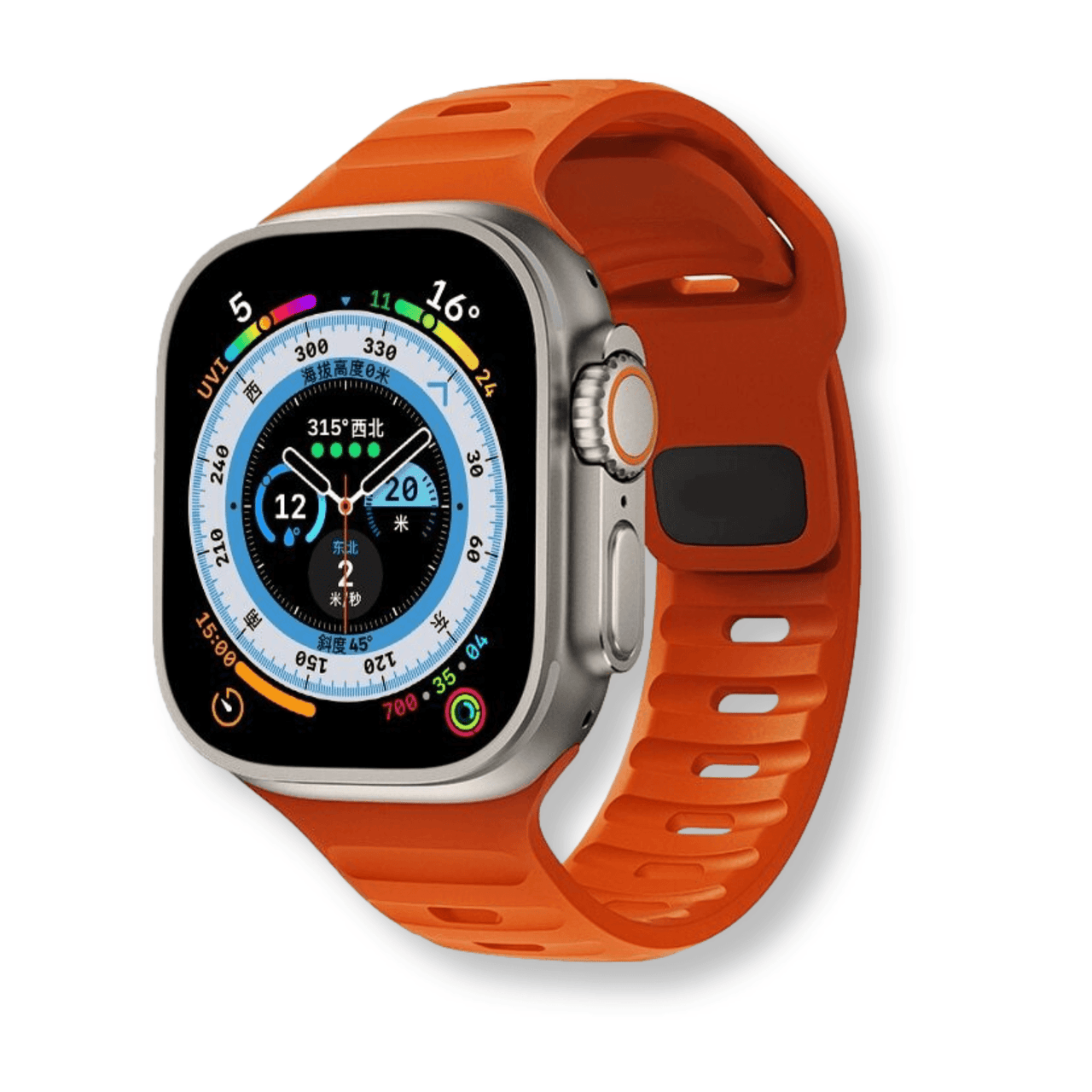
On synthetic straps, including those found in our rubber and silicone watch bands collection, keepers typically fail through tearing rather than gradual stretching. Different elastomers and constructions behave differently. Inspect for cracks, tears, permanent deformation or a change in flexibility rather than assuming one failure mechanism. If a silicone keeper has split or stretched out of shape, the main strap may also be experiencing surface degradation or hardening. If the elastomer feels brittle or stiff, replacing the entire strap is the safest choice.
Supple suede leather presents a different challenge. Straps crafted from our suede leather watch bands line feature a soft, fibrous nap. Suede keepers can lose tension because the velvety fibres pack down and compress over months of daily use. While suede keepers can sometimes be re-secured if the stitching holds, the fibrous nature of the material makes re-gluing split loops difficult without staining the surrounding nap.
If you prefer to eliminate keeper loop maintenance entirely, consider moving away from traditional two-piece leather to metal hardware. Exploring our stainless steel watch bands provides access to bracelet designs that rely on deployant clasps, micro-adjustment links, or friction locks. Because steel bracelets tuck extra length into sliding clasps or use removable links, they completely eliminate the need for fixed or floating strap keepers.
Safe Handling and When to Consult a Professional Watchmaker
If you decide to replace a loose floating keeper yourself, maintain clean, controlled working habits. Work over a flat, padded surface such as a watchmaker mat or clean microfiber cloth to prevent dropped spring bars from bouncing onto the floor.
Never use household glues, cyanoacrylate superglues, chemical solvents, or lubricants to fix a loose watch strap keeper. Unapproved adhesives or treatments can leave residue or damage a finish and do not establish that the original retention arrangement has been restored. Use only a manufacturer-approved repair method or professional service.
Always consult manufacturer instructions for your specific strap and watch case model before attempting hardware removal. If your watch utilizes screw-in lug bars, proprietary clasp pins, or tight tolerance end-links, do not force them with makeshift tools. Bring your timepiece to a professional watchmaker who possesses the exact tooling required to remove hardware without gouging the watch lugs or warping the spring bars.

Frequently Asked Questions About Watch Keepers
Can I shrink a stretched leather watch keeper with water or heat?
No. Never apply hot water, hairdryers, or direct heat sources to a leather watch keeper. Direct heat dries out the natural moisture and tanning fats within the hide, causing the leather to shrink unpredictably, crack, and become permanently brittle. If a leather keeper has stretched beyond functional friction, it must be replaced.
Why does my floating keeper keep sliding toward the buckle?
A floating keeper relies entirely on surface friction against the strap body to stay parked near the tail. If the keeper has stretched, or if the strap leather has compressed and thinned from wear, friction is lost. When there is insufficient tension, wrist movement naturally drives the loose loop toward the narrower buckle area, freeing the tail.
Are watch strap keepers universal in size?
Watch strap keepers are not universal. Keepers must match both the width of the strap at the tail segment and the strap thickness. Because many watch bands feature a pronounced taper (for example, tapering from 20mm at the watch lugs down to 16mm or 18mm at the buckle), a keeper sized for the lug end will be far too loose near the buckle.
Is it safe to wear a watch with only one keeper?
It depends on the design. Some minimalist straps are engineered intentionally with a single, wider floating keeper. However, if your strap was originally designed with both a fixed and a floating keeper, a missing loop changes the intended arrangement and should be assessed. If the tail cannot be held as intended or the fastening is uncertain, stop wearing the combination until it is repaired or replaced.
How do I safely measure for a replacement keeper?
Measure the width and total thickness of your strap at the exact location where the keeper rests when buckled. You need the internal dimensions of the replacement loop to match the combined thickness of both strap layers (the base strap plus the overlapping tail) while matching the lateral width of the strap at that specific point. If uncertain, consult a watchmaker or check manufacturer specifications.
If your watch band exhibits worn stitching, stretched loops, or persistent retention problems, do not wait for an accidental drop to address the problem. Explore the curated collections at Watchband Direct to find dependable replacement straps and precision tools designed to keep your timepiece secure on your wrist.