Key Takeaways:
- Falling between factory strap holes is a common issue caused by fixed hole spacing and natural daily wrist swelling.
- Punching makeshift holes into straps can compromise structural integrity, split edge sealing, and void manufacturer warranties.
- Deployant clasps, differing buckle tongue profiles, and micro-adjust mechanisms provide millimeter-level refinement without altering straps.
- Alternative strap materials, such as flexible synthetics or finely incremented metal links, offer greater sizing adaptability.
- If a band requires complex modification or features integrated proprietary hardware, consultation with a professional watchmaker is strongly advised.
Finding the sweet spot for your wristwatch can be surprisingly elusive. Standard watch bands feature factory-punched holes spaced anywhere from six to ten millimeters apart. When your wrist falls squarely in the middle of that gap, one hole leaves the case sliding down past your wrist bone, while the next hole restricts circulation and leaves deep impressions in your skin. When you find your watch strap between holes, solving the dilemma requires careful consideration rather than brute force.
Table of Contents:
- Understanding Strap Hole Spacing and Wrist Fluctuations
- Why DIY Hole Punching Often Compromises Strap Structure
- Using Deployant Clasps to Fine-Tune Pin Position
- Micro-Adjust Clasps and Bracelet Alternatives
- Continuous-Fit Materials and Flexible Closures
- Buckle Tongue Thickness and Minor Hardware Swaps
- When to Consult a Qualified Watchmaker
- Frequently Asked Questions
Understanding Strap Hole Spacing and Wrist Fluctuations
Most traditional watch bands are manufactured around standardized measurements that do not account for individual wrist anatomy. The distance between adjustment holes often ranges between 6mm and 8mm. For a high-profile, heavier sports watch, an 8mm difference represents the variance between a snug, balanced hold and an uncomfortably loose drape that allows the case to rotate out of position. This variance becomes especially pronounced if you regularly wear classic leather watch bands and straps, which maintain fixed dimensions until broken in over extended wear.
Your wrist circumference also changes throughout the day. Temperature shifts, physical activity, hydration levels, and ambient humidity can expand or contract soft tissue by several millimeters. When a factory strap provides only coarse intervals, a fit that feels comfortable in a cool morning office may feel uncomfortably tight by mid-afternoon. Understanding that your wrist size is a moving target clarifies why a single fixed hole rarely stays comfortable under all conditions.

Before making any changes to your watch or band, measure your wrist at different times of day using a flexible measuring tape. Noting the difference between your morning and evening wrist circumference will help you decide whether your goal is a permanent intermediate sizing position or an adaptable closure mechanism that accommodates everyday physiological changes.
Why DIY Hole Punching Often Compromises Strap Structure
When an existing hole is slightly too tight and the adjacent one is slightly too loose, punching an extra hole halfway between them might seem like the obvious remedy. However, this approach carries substantial structural risks. Strap makers calculate hole spacing to maintain enough material between perforations so tensile load does not tear the surrounding layers. Adding an intermediary hole reduces the bridge of material between punctures, which can lead to tearing under routine pull force.
Multi-layer straps present even greater challenges. High-grade straps are typically built with an upper grain layer, internal reinforcement, and a soft lining leather. When factory holes are created, they are cleanly punched and often sealed along the interior rim. Piercing through these layers with household tools or generic handheld punches can fray core fibers, break internal bonding adhesives, and cause edge coatings to crack. In our complete guide to leather watch bands, we highlight the layered craftsmanship that gives premium leathers their durability, illustrating why uncontrolled perforations undermine that balance.
The danger is especially high on specialized hides. Modifying alligator and crocodile watch bands requires exact precision because the natural scale patterns create uneven resistance under pressure. Punching directly between scales or near a fragile scale boundary can split the leather irreparably, ruining an expensive band instantly. Unless a strap is specifically engineered with dense, reinforced micro-perforations, adding intermediate holes is rarely advisable.
Using Deployant Clasps to Fine-Tune Pin Position
One of the most effective ways to address a watch strap between holes without damaging the material is replacing the standard pin buckle with a deployant clasp. Deployant closures feature folding metal arms that snap closed beneath the strap. Because the geometry of a folding clasp alters the curvature and path of the strap around the underside of your wrist, it naturally changes the effective inner circumference of the band.

In many instances, shifting from a flat pin buckle to a deployant clasp adds approximately two to four millimeters of internal slack when using the exact same hole position. This subtle change often bridges the gap between an overly tight setting and an overly loose setting. Butterfly clasps with dual folding arms tend to center the watch differently than single-fold deployants, giving you multiple ways to adjust how the watch sits against your skin.
To experiment with clasps safely, use an appropriate watch spring bar remover to unmount your existing tang buckle without scratching the strap leather or marring the buckle flanks. Ensure the clasp you select matches the precise inner width of your strap at the buckle end, which is often narrower than the lug width. Always check manufacturer specifications for clasp compatibility, as strap thickness can limit which deployant designs will close securely.
Micro-Adjust Clasps and Bracelet Alternatives
If you prefer metal bands or find that leather does not offer the incremental control you need, switching to an adjustable metal bracelet can resolve fit issues. Traditional link bracelets rely on full-sized and half-sized links, but the most versatile options integrate micro-adjustment mechanisms directly into the clasp body. These designs provide multiple interior pin positions spaced as little as two millimeters apart, allowing for fine-tuned adjustments that leather hole patterns cannot match.
A broad selection of stainless steel watch bands incorporates clasps with external or internal spring bar adjustment holes. Some advanced clasps feature tool-free sliding tracks that let you expand or contract the bracelet by several millimeters with the press of a finger, making it easy to adapt to wrist swelling throughout the day. This level of precision eliminates the problem of falling between conventional sizing intervals.
Keep in mind that installing a metal bracelet requires confirming lug geometry, spring bar diameter, and case clearance. Not all bracelets fit all watch cases, and attempting to force mismatched solid end links can scratch your lugs. If you are uncertain about whether a third-party bracelet will clear your watch case, verify measurements with the manufacturer before mounting the hardware.
Continuous-Fit Materials and Flexible Closures
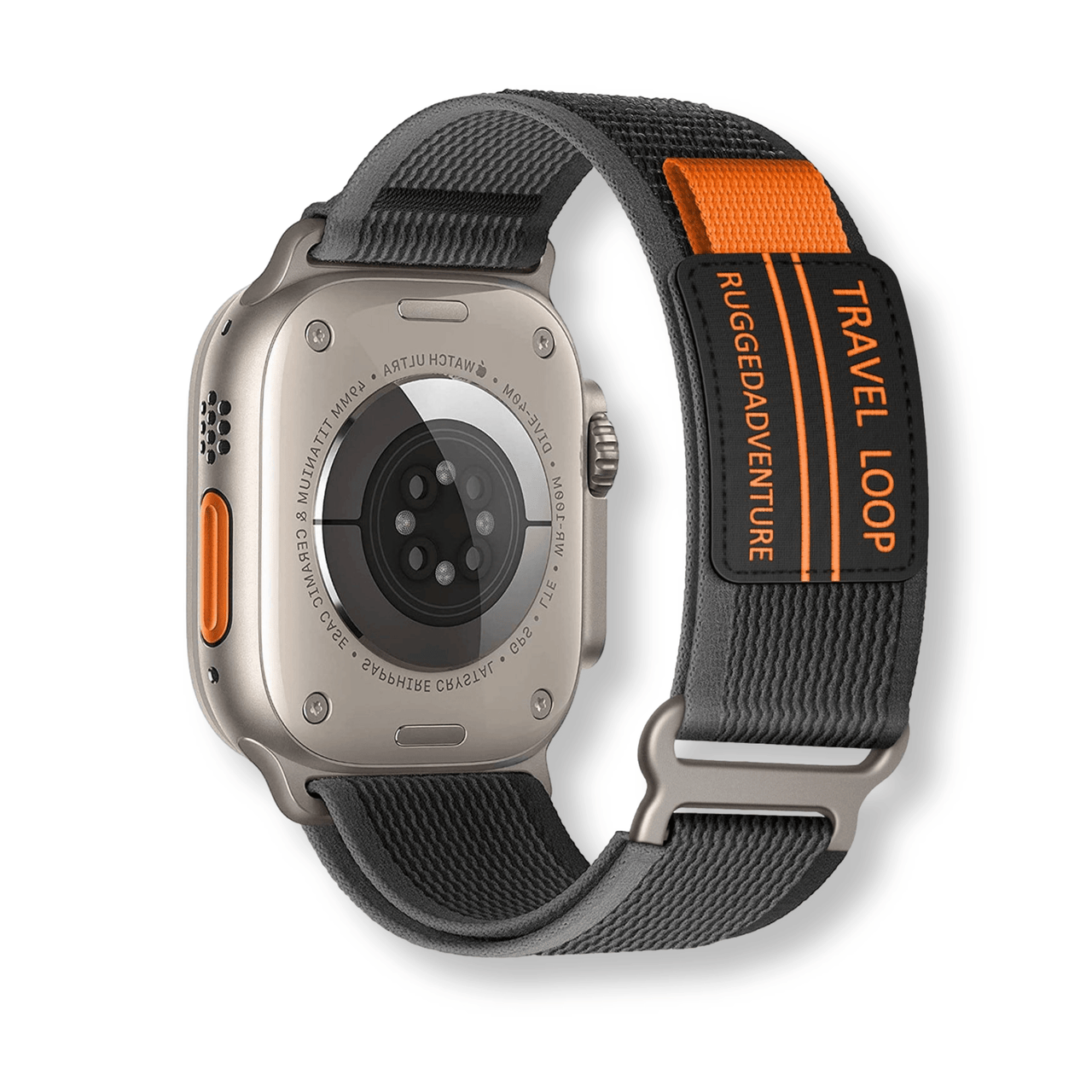
Another option for resolving intermediate sizing problems is choosing materials that do not rely on widely spaced pre-punched holes. Certain continuous-fit closures bypass pin holes entirely, utilizing hook-and-loop systems, friction ladders, or magnetic clasps. Because these systems lack predefined anchor points, you can secure them at any point along their length, achieving an exact fit every time.

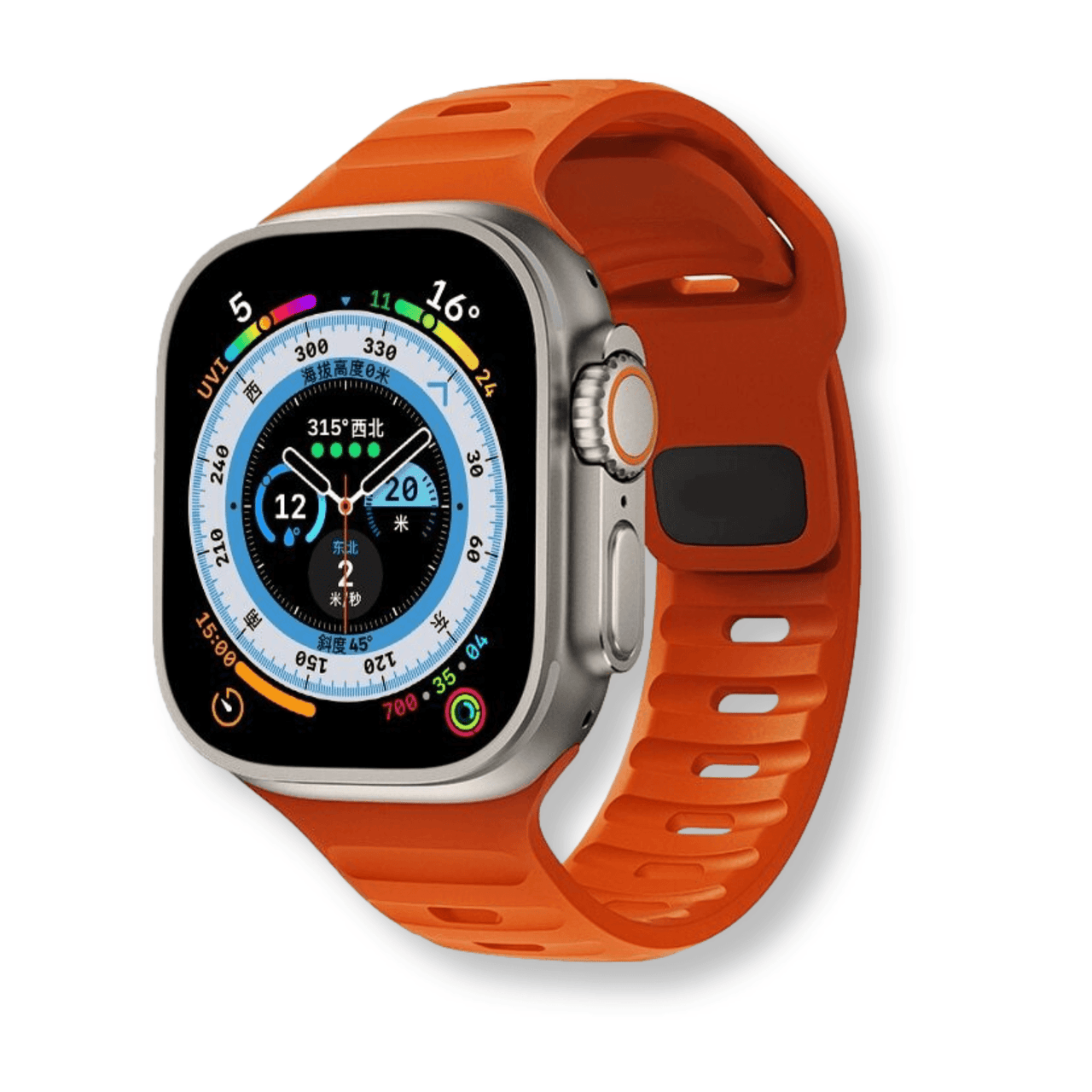
Modern synthetic straps also handle tension differently than rigid leathers. High-grade rubber and silicone watch bands frequently feature tighter hole spacing due to the uniform tensile strength of molded polymers. Some rubber designs incorporate small internal relief channels or elastic properties that gently expand and contract with your wrist movement, keeping the case stable without cutting into the skin.
When selecting alternative strap materials, be aware that elasticity varies substantially across compounds. Natural vulcanized rubber provides structural support with minimal stretch, while soft silicone offers higher flexibility. Neither material should be pulled excessively taut, as sustained over-tension can distort the lug connection points or place undue shear stress on the spring bars holding the watch together.
Buckle Tongue Thickness and Minor Hardware Swaps
Sometimes the solution to a fit that sits between holes lies in the buckle tongue itself. The metal tongue, or tang, that passes through the strap hole comes in various shapes, thicknesses, and curvatures depending on the manufacturer. A wide, flat tongue occupies more volume within the hole than a slender, cylindrical pin. This difference changes how deep the strap seats inside the buckle frame, altering the effective circumference by one or two millimeters.
You can also explore switching between standard buckles and deep-recess thumbnail buckles. A buckle with an offset crossbar sits further back on the strap tail, pulling the strap slightly tighter than an open, elevated buckle frame. These hardware differences allow for subtle fit adjustments without cutting, modifying, or stretching the strap itself.
When swapping buckles, always use a dedicated watch repair tool kit equipped with non-marring pin pushers and fine-point tools. Working carefully prevents slips that could gouge the buckle metal or tear the surrounding strap stitching. Always confirm that the replacement tang fits the width of your strap holes smoothly, as forcing an oversized tongue through a small hole will cause premature wear.
When to Consult a Qualified Watchmaker
While basic strap and buckle swaps can be performed at home with proper care, certain situations call for professional intervention. If you own a high-value strap, an integrated strap with bespoke end links, or an exotic material like shell cordovan or alligator, attempting home modifications can permanently damage costly components. A qualified watchmaker has access to specialized bench tools, including caliber-matched rotary punches, heat-treatment sealers, and correct edge-coating compounds.

A professional can evaluate whether adding an intermediate hole is structurally viable based on the internal construction of your specific strap. If the material allows it, they can punch a clean hole that matches the factory shape precisely, whether round, oval, or rectangular, and reseal the exposed interior grain to prevent moisture ingress. They can also inspect lug tolerances and confirm that spring bars seat fully in the lug holes under load.
If you encounter unusual case geometry, stubborn screw pins, or clasps that do not fasten smoothly, step away from the workbench. For broader maintenance procedures and band care guidance, refer to the educational resources in our comprehensive watch compendium. When unexpected resistance arises, consulting a professional watchmaker is the safest way to protect your timepiece and strap investment.
Frequently Asked Questions
Can I use an ordinary belt hole punch on my watch strap?
Standard household or belt punches are generally unsuited for watch straps. Belt punches create large holes intended for thick utility leather, which can weaken the narrow profile of a watch band. Watch strap holes often require small diameters, such as 1.5mm or 2.0mm, and must be aligned precisely to avoid tearing the surrounding edge margins. Using oversized punches can ruin the band structure.
Will a leather strap stretch over time to fix an in-between fit?
Unlined, single-layer leather straps may stretch slightly over extended use as the fibers relax under body heat and natural tension. However, high-grade lined straps typically incorporate internal structural webbing or interlinings specifically designed to resist stretching. Relying on stretch to solve a fit issue often results in premature wear rather than a reliable, comfortable fit.
How does a deployant clasp change how a strap fits?
A deployant clasp alters the strap trajectory by routing both ends through a rigid folding metal frame beneath your wrist. This folding mechanism changes the curvature and effective inner diameter of the assembled band, often shifting the fit by two to three millimeters compared to a flat pin buckle on the exact same hole setting.
Can micro-adjust clasps be added to any metal watch band?
Micro-adjust clasps cannot be mounted universally. Compatibility depends on the width of the bracelet at the clasp attachment point, the style of the final link connection, and whether the bracelet uses spring bars, push pins, or screws. Always consult the bracelet manufacturer or a watchmaker to confirm compatibility before purchasing an aftermarket clasp.
What should I do if my wrist swells significantly during the day?
If your wrist fluctuates noticeably between morning and evening, avoid tightly punched, non-elastic straps. Consider bracelets with on-the-fly micro-adjusting clasps, elastic woven bands, or premium rubber straps with textured backings. These options expand and contract with your wrist, preventing the pressure points caused by fixed hole intervals.
Find Your Perfect Watch Strap Fit
Tired of compromising between a strap that feels too loose and one that feels too tight? Explore our collection of premium straps, clasps, and dedicated watch tools to achieve the comfortable, balanced fit your timepiece deserves.