Treat the following as design directions, not a tested product ranking or a list of products currently stocked. No particular maker, wrist-size range, buckle specification or durability result is implied. Choose the look first, then verify a real product against your watch and wrist.
Ten design directions to explore
- Abstract color blocks: combine two or three colors from the dial or your clothing. Ask for photographs of the actual strap rather than assuming every hand-finished piece will look identical.
- Contrast stitching: a restrained strap with a brighter stitch can echo a seconds hand without competing with the dial. Check whether the pictured stitching is decorative or part of the construction.
- Tonal texture: use a textured surface in a similar color to the dial for a quieter change. Product photographs do not establish the material or its care requirements.
- Floral motifs: choose a printed or embossed floral design if you prefer organic shapes. Check the pattern scale on the actual strap width.
- Geometric lines: repeat an angular case or dial detail with stripes or a geometric pattern. Consider how the design appears when the band is fastened.
- Dark mesh: use a dark mesh finish as a visual contrast with a light dial. Confirm the finish, clasp mechanism and adjustment range on the specific product.
- Warm metallic tones: compare a warm-colored bracelet with the case in natural light. Similar color names do not guarantee that two finishes match.
- Camouflage with an accent: pair an earth-tone pattern with one vivid detail. The design is a style choice, not evidence that the strap is suitable for an outdoor activity.
- Multicolor stripes: pick one stripe color to repeat elsewhere in your outfit. Look at the real product photographs to check stripe spacing and orientation.
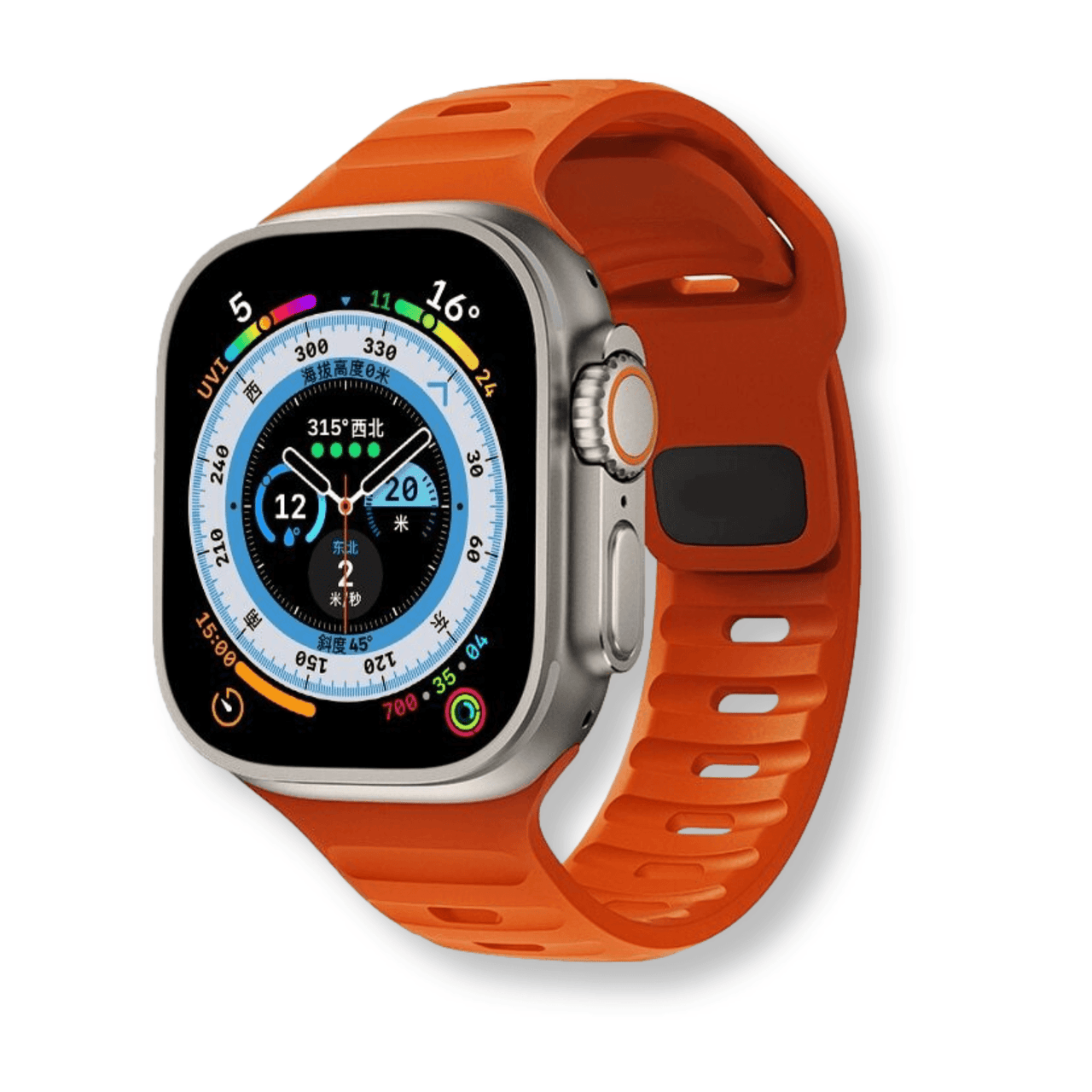
- A bright solid color: let one saturated color be the focal point. Claims about glow, visibility or performance need evidence from the particular product, not its appearance.
Check the product before ordering
Identify your full watch reference and attachment type. Conventional spring-bar lugs, proprietary connectors and fitted bracelet end links are not interchangeable simply because a width matches. Verify attachment width, clearance and the required pins or adapters; ask a watchmaker when the mechanism is uncertain. Check the usable wrist-size range, strap length and clasp adjustment against your wrist. An adjustable strap is not automatically suitable for everyone.
Style does not establish performance
A material name or pattern does not prove that a band is waterproof, irritation-free or suitable for sport. Follow the instructions for the actual strap and watch. A replacement band does not increase the watch’s water resistance. Confirm care requirements, coatings and return conditions with the seller, especially for personalized finishes.
Use these ideas to make a shortlist, then compare documented specifications. If you cannot verify an attachment or sizing detail, resolve it before buying rather than relying on a photograph.