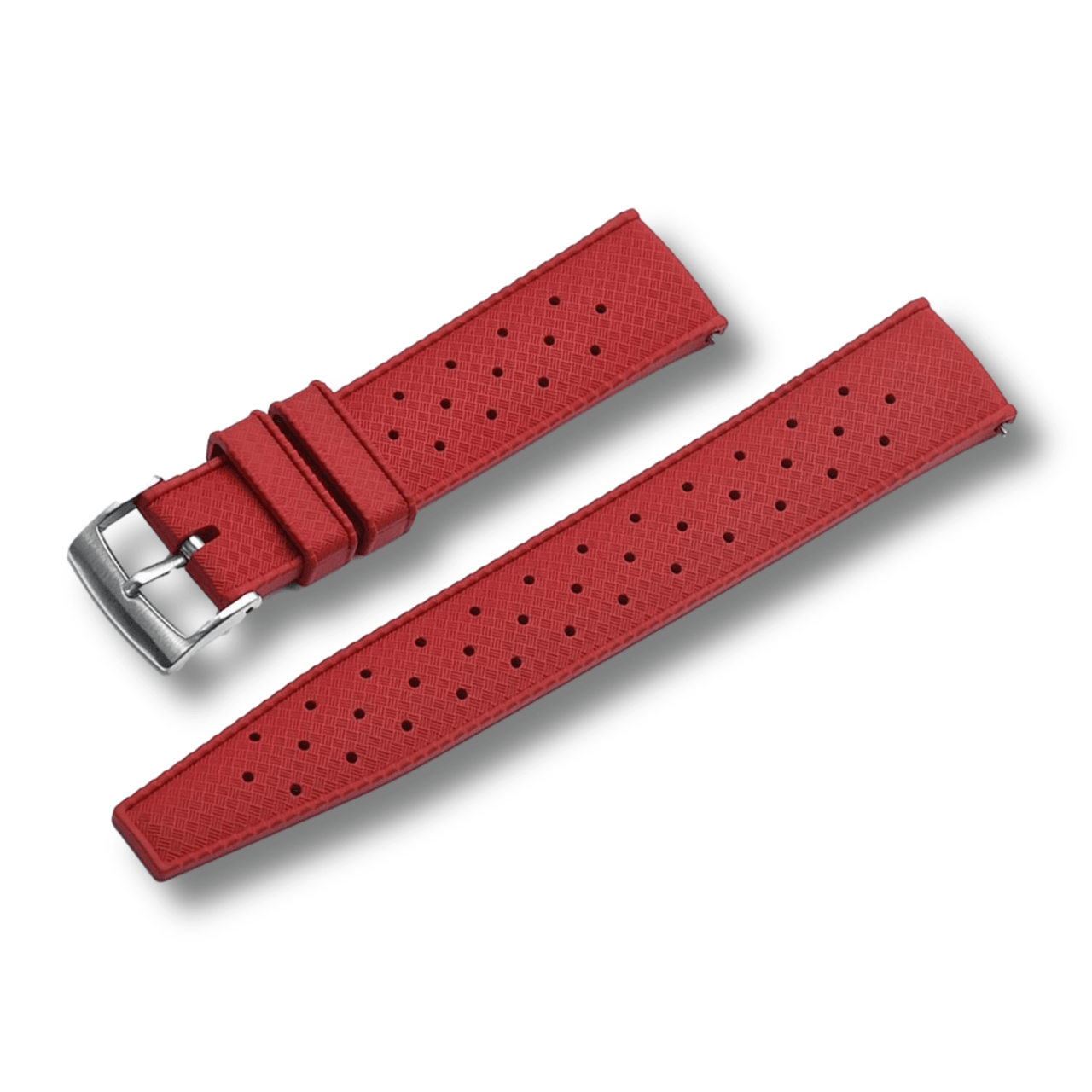
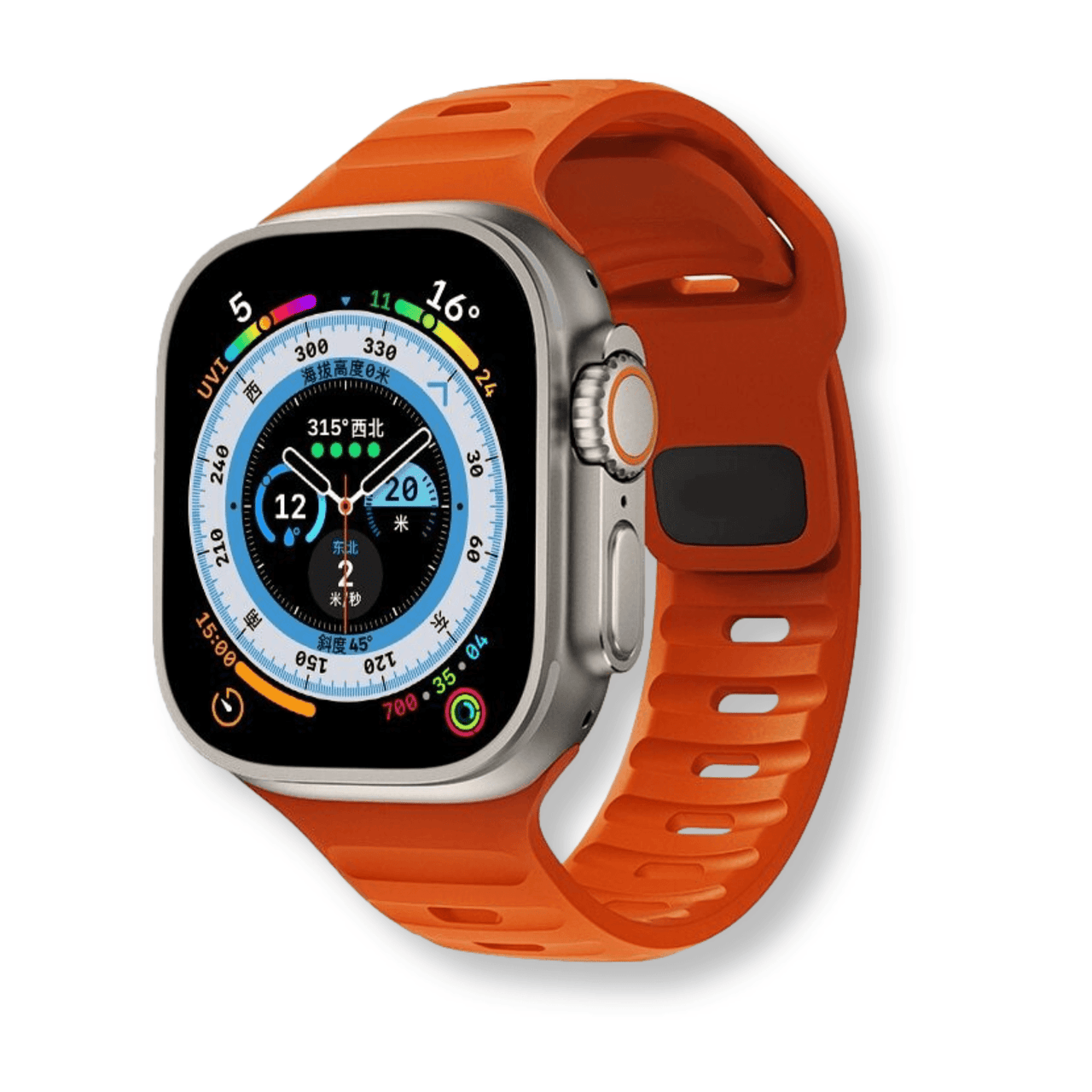
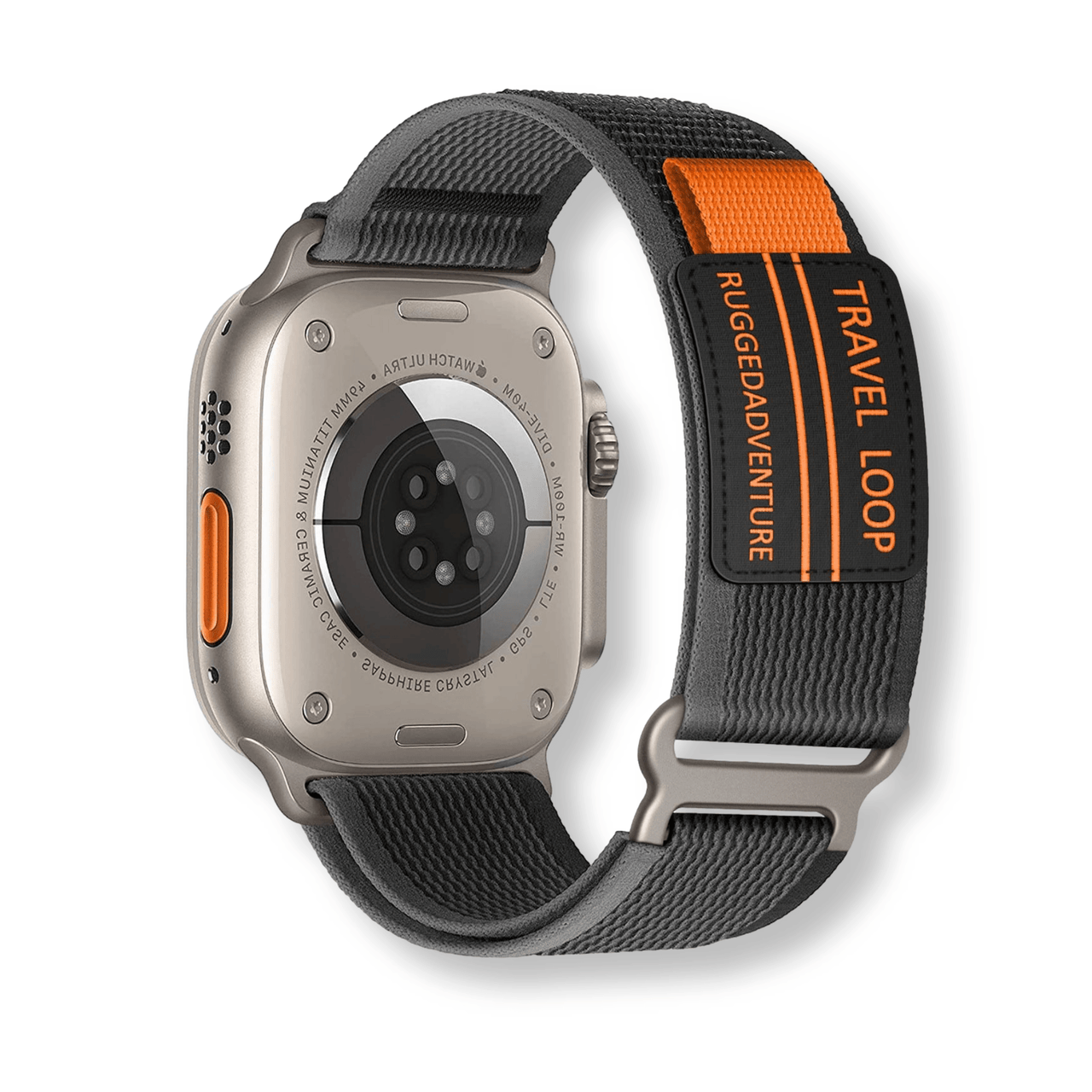
Garmin has firmly established itself as the premier brand for athletes, outdoor adventurers, and fitness enthusiasts. However, as the capabilities of these remarkable smartwatches have evolved, so too has the ecosystem of garmin watch bands. In 2026, customizing your Garmin is no longer just about replacing a worn-out strap; it is about adapting your high-tech timepiece to seamlessly transition from a grueling triathlon to a formal boardroom meeting.
With an extensive lineup of models—ranging from the rugged Fenix and Epix series to the sleek Venu and Forerunner lines—understanding which watch band fits your specific device can feel like navigating a maze. Garmin utilizes a mix of proprietary QuickFit systems and industry-standard Quick Release mechanisms, with sizes varying drastically across different generations and sub-models.
This comprehensive guide is designed to be your ultimate resource for everything related to Garmin watch bands. We will break down the differences between attachment systems, provide exhaustive compatibility lists for the latest 2026 models and legacy devices, help you choose the ideal materials, and walk you through the installation process.
Key Takeaways
- Two Main Systems: Garmin primarily uses two attachment methods: the proprietary QuickFit system (common on rugged models like Fenix/Epix) and the standard Quick Release system (common on Vivoactive/Venu/Forerunner).
- Size Matters: QuickFit bands come in 20mm, 22mm, and 26mm. Quick Release bands typically come in 18mm, 20mm, and 22mm. You cannot mix and match sizes.
- Material Dictates Function: Choose silicone for intense workouts, nylon/NATO for rugged comfort, and leather or metal for everyday lifestyle wear.
- Easy Swapping: Most modern Garmin bands can be swapped in seconds without tools, though older models or deep cleans may require a spring bar remover.
Table of Contents
- 1. The Evolution of Garmin Watch Bands in 2026
- 2. Understanding Garmin's Proprietary Band Systems (QuickFit vs. Quick Release)
- 3. How to Measure and Find Your Exact Garmin Watch Band Size
- 4. Garmin Fenix, Epix & Instinct Series Compatibility Guide
- 5. Garmin Forerunner, Venu & Vivoactive Compatibility Guide
- 6. Choosing the Right Material for Your Lifestyle
- 7. Step-by-Step Guide to Changing Your Garmin Watch Band
- 8. Frequently Asked Questions About Garmin Watch Bands
1. The Evolution of Garmin Watch Bands in 2026
The journey of Garmin wearables has been nothing short of spectacular. A decade ago, a Garmin watch was a purely functional piece of plastic and rubber, designed to survive marathons and mountain climbs but rarely worn to a dinner party. Fast forward to 2026, and the landscape has completely shifted. Today's Garmin watches feature stunning AMOLED displays, titanium bezels, and sophisticated health-tracking sensors that users want to wear 24/7.
Because these devices are now worn around the clock for sleep tracking, stress monitoring, and daily smartwatch functions, the demand for versatile garmin watch bands has skyrocketed. Users recognize that wearing a sweaty, salt-stained silicone strap to the office is less than ideal. Conversely, wearing a premium leather strap during a sweaty CrossFit session will rapidly degrade the material.
This dual demand for extreme durability and everyday elegance has led to an explosion of aftermarket and first-party strap options. Upgrading your watch band is the easiest and most cost-effective way to refresh the look of your expensive smartwatch. Furthermore, regularly swapping and cleaning your bands is crucial for skin hygiene, preventing the dreaded "watch rash" that can occur when moisture and bacteria are trapped against the skin.
2. Understanding Garmin's Proprietary Band Systems (QuickFit vs. Quick Release)
Before purchasing new garmin watch bands, it is absolutely critical to understand the attachment mechanism your specific watch uses. Garmin employs two primary systems, and they are not interchangeable without specialized adapters.
The Garmin QuickFit System
Introduced to solve the problem of cumbersome strap changes on their rugged outdoor watches, the QuickFit system is a proprietary Garmin design. It features a robust, spring-loaded latch built directly into the end of the watch band. To remove the band, you simply pull down on the latch, and the band releases from the watch's thick, non-removable lug pin. To install, you just snap it over the pin.
QuickFit is predominantly found on Garmin's high-end, rugged lines (Fenix, Epix, Tactix, Enduro, Descent, and Instinct). Because these watches are heavier and subjected to extreme forces, the QuickFit system relies on a very thick, secure metal bar spanning the watch lugs. QuickFit bands come in three distinct sizes:
- QuickFit 20: For smaller wrists (e.g., Fenix 8S, Fenix 7S).
- QuickFit 22: The standard size (e.g., Fenix 8, Epix Pro 47mm).
- QuickFit 26: For the largest, most rugged watches (e.g., Fenix 8X, Tactix, Enduro).
The Industry Standard Quick Release System
For their sleeker, lighter smartwatches aimed at runners and general fitness enthusiasts, Garmin uses the industry-standard Quick Release system. These bands feature a tiny metal pin (spring bar) running through the end of the strap, with a small knob protruding through a cutout in the material. By sliding the knob with your fingernail, you compress the spring bar, allowing you to pop the band in and out of the watch lugs.
Quick Release is found on the Forerunner, Venu, Vivoactive, and Lily series. Because this is an industry standard, you have an incredibly vast array of third-party options available. The common sizes are:
- 18mm Quick Release: Often found on smaller devices like the Venu 3S.
- 20mm Quick Release: Very common on mid-sized watches like the Venu 3 and Forerunner 165/245.
- 22mm Quick Release: Used on larger fitness watches like the Forerunner 265/965 and Vivoactive 4.
3. How to Measure and Find Your Exact Garmin Watch Band Size

If you are unsure which model of Garmin watch you own, or if you simply want to verify the size before ordering new garmin watch bands, measuring your watch is a straightforward process. You do not need to be a horologist to get this right, but precision is key.
Step 1: Identify your watch model. The easiest way to find your band size is to know your exact watch model. Turn your Garmin watch over and look at the case back. Garmin usually prints the model name (e.g., "Fenix 7 Solar" or "Forerunner 965") around the optical heart rate sensor. Once you have the model name, you can refer to the compatibility charts in the sections below.
Step 2: Measure the lug width. If the model name has worn off, you will need to measure the lug width. The "lugs" are the two protruding "horns" on the top and bottom of the watch case that hold the band in place. Using a metric ruler or a set of digital calipers, measure the exact distance between the inside of the two lugs.
Do not measure the outside of the lugs, and do not measure the width of the strap itself where it flares out. The measurement between the inside of the lugs will typically be exactly 18mm, 20mm, 22mm, or 26mm.
Step 3: Determine the attachment type. Look at how your current band connects. Does it have a sliding metal pin visible from the back of the strap? That is a Quick Release band. Does it have a plastic or metal latch that you pull down to snap the band off a thick metal bar? That is a QuickFit band.
For more in-depth information on watch anatomy and sizing standards across the entire horology industry, we highly recommend checking out our comprehensive Watch Compendium, which covers everything from lug-to-lug measurements to spring bar thicknesses.
4. Garmin Fenix, Epix & Instinct Series Compatibility Guide
The premium rugged lineup from Garmin almost exclusively utilizes the proprietary QuickFit system. Because these watches are offered in three distinct case sizes to accommodate different wrists, you must pay close attention to the letter suffix on your watch model (S, Standard, or X).
QuickFit 20 (20mm)
Designed for the "S" (Small) variants of Garmin's rugged watches. These are typically 42mm watch cases.
- Fenix 8S, Fenix 7S (Standard, Solar, Sapphire Solar)
- Fenix 6S (Pro, Sapphire), Fenix 5S, Fenix 5S Plus
- Epix Pro (Gen 2) 42mm
- Instinct 2S (Standard, Solar, Camo, Surf)
- Descent Mk2S
QuickFit 22 (22mm)
Designed for the standard variants. These are typically 47mm watch cases and represent the most common size in the rugged lineup.
- Fenix 8, Fenix 7 (Standard, Solar, Sapphire Solar)
- Fenix 6 (Pro, Sapphire), Fenix 5, Fenix 5 Plus
- Epix (Gen 2), Epix Pro (Gen 2) 47mm
- Instinct, Instinct 2, Instinct Crossover
- MARQ Series (Gen 1 and Gen 2 - Note: MARQ uses a specialized flush fit, but standard QuickFit 22 works)
- Forerunner 965, 955, 945, 745 (Note: These natively use 22mm Quick Release, but can accept QuickFit 22 if you leave the spring bars installed).
QuickFit 26 (26mm)
Designed for the "X" (Extra Large) variants and specialized oversized watches. These are typically 51mm watch cases.
- Fenix 8X, Fenix 7X (Solar, Sapphire Solar)
- Fenix 6X (Pro, Sapphire, Solar), Fenix 5X, Fenix 5X Plus
- Epix Pro (Gen 2) 51mm
- Enduro, Enduro 2, Enduro 3
- Tactix 7, Tactix Delta, Tactix Charlie
- Instinct 2X Solar
- Descent Mk1, Mk2, Mk2i, Mk3i (51mm)
5. Garmin Forerunner, Venu & Vivoactive Compatibility Guide
Garmin's running and lifestyle watches favor the lighter, more universal Quick Release system. If you own one of these watches, you are in luck, as you can use almost any standard watch band on the market, provided the millimeter width is correct.
18mm Quick Release
Commonly found on Garmin's smallest lifestyle watches, catering to petite wrists.
- Venu 3S, Venu 2S
- Vivoactive 4S
- Forerunner 265S, Forerunner 255S
- Legacy Hero Series (Captain Marvel, Rey)
20mm Quick Release
The golden standard for medium-sized fitness watches. This is arguably the most common watch band size in the world.
- Venu 3, Venu 2 Plus, Venu Sq 2, Venu Sq
- Vivoactive 5, Vivoactive 3 (Music)
- Forerunner 165, Forerunner 55, Forerunner 245 (Music)
- Approach S42, S40
22mm Quick Release
Used on larger-faced lifestyle watches and high-end running watches.
- Forerunner 265, Forerunner 255
- Venu 2
- Vivoactive 4
- Legacy Hero Series (Darth Vader, First Avenger)
Note on high-end Forerunners: Models like the Forerunner 965 and 955 come with 22mm Quick Release bands natively. However, their internal lug design allows users to snap 22mm QuickFit bands directly onto the existing spring bars, giving users the best of both worlds.
6. Choosing the Right Material for Your Lifestyle

Finding the correct size is only half the battle. To truly maximize the potential of your smartwatch, you need garmin watch bands crafted from materials that suit your daily activities. Wearing the wrong material can lead to discomfort, skin irritation, or premature wear and tear on the strap.
Silicone and FKM Rubber
Silicone is the undisputed king of fitness. It is completely waterproof, sweat-resistant, and incredibly easy to clean. High-quality fluoroelastomer (FKM) rubber offers even greater durability and resistance to UV rays and harsh chemicals like chlorine. If you are swimming, running, or lifting weights, you need a silicone strap. They stretch comfortably as your wrist swells during exercise. Browse our extensive collection of high-performance silicone watch bands to find the perfect color to match your workout gear.
Nylon and NATO Straps
For those who find silicone too sweaty or restrictive, nylon is an excellent alternative. Nylon bands are highly breathable, incredibly lightweight, and offer a rugged, tactical aesthetic that pairs perfectly with the Fenix and Instinct lines. Hook-and-loop (Velcro) nylon straps offer infinite adjustability, ensuring a perfect fit for optical heart rate accuracy. For a classic, secure outdoor look, explore our durable NATO watch bands. They are washable and dry quickly after a hike or a rainy run.
Premium Leather
When the workout ends and it is time to head to the office or a formal event, a sports watch can look out of place. Swapping your rubber strap for a high-quality leather band instantly transforms your Garmin from a fitness tracker into a sophisticated timepiece. Leather develops a beautiful patina over time, molding to the shape of your wrist. However, leather and water do not mix; never wear a leather band in the shower or during a sweaty workout. Elevate your evening attire with our selection of leather watch bands.
Titanium and Stainless Steel
For the ultimate executive look, metal bracelets are unmatched. Titanium is particularly popular for Garmin watches because it matches the bezel material of high-end Fenix and Epix models while remaining incredibly lightweight. Stainless steel offers a heavier, more traditional luxury watch feel. Metal bands are durable and great for daily wear, though they are not recommended for high-impact sports where the watch needs to be strapped tightly against the skin for heart rate monitoring.
7. Step-by-Step Guide to Changing Your Garmin Watch Band

One of the greatest advantages of modern garmin watch bands is how easily they can be swapped. Whether you are transitioning from the gym to the office, or simply replacing a broken strap, the process takes mere seconds. However, the method differs depending on the system your watch uses.
Installing QuickFit Bands (Fenix, Epix, Instinct)
- Removal: Locate the sliding latch on the underside of your current QuickFit band, right where it meets the watch lug.
- Pull the latch downward (away from the watch body) using your fingernail.
- While holding the latch down, pull the band away from the watch. The thick metal pin will remain attached to the watch.
- Installation: Take your new QuickFit band. You do not need to pull the latch to install it. Simply align the curved hook of the band over the metal pin on the watch.
- Press down firmly until you hear a satisfying "click." Give the band a firm tug to ensure it is securely locked in place.
Installing Quick Release Bands (Forerunner, Venu, Vivoactive)
- Removal: Turn the watch over. Locate the small metal pin protruding from the strap near the watch lug.
- Using your fingernail, slide the pin inward (towards the center of the strap). This compresses the internal spring.
- While holding the pin inward, gently pull the strap away from the watch lug to release it.
- Installation: Take your new Quick Release band. Insert the side of the pin that does not have the sliding knob into the small hole on one of the watch lugs.
- Slide the knob on the new strap inward, align the other end of the pin with the hole on the opposite lug, and release the knob.
- Wiggle the strap slightly to ensure both ends of the pin have securely popped into the lug holes.
Dealing with Older Models or Stubborn Pins: Some older Garmin models (like the original Fenix 3 or older Forerunners) utilized screwed-in pins or standard tension spring bars without quick-release knobs. If you are trying to remove a traditional strap, or if you need to remove the thick pins on a Fenix to thoroughly clean the watch case, you will need the proper tools. We highly recommend using a dedicated watch spring bar remover to safely compress pins without scratching your watch case. You can find this and other helpful maintenance tools in our accessories collection.
8. Frequently Asked Questions About Garmin Watch Bands
Even with a comprehensive guide, specific questions often arise when users look to upgrade their garmin watch bands. Here are the most common inquiries we receive from the Garmin community in 2026.
Can I use regular watch bands on my Garmin?
Yes, but it depends on your watch model. If your Garmin uses the standard Quick Release system (like the Venu, Vivoactive, or most Forerunners), you can use any standard watch band from any brand, as long as the millimeter width (18mm, 20mm, or 22mm) matches your watch's lug width. If you have a QuickFit watch (like a Fenix), you cannot easily use standard bands unless you purchase special aftermarket adapters that convert the thick fixed bar into a standard spring bar setup.
Are Garmin QuickFit bands interchangeable with Apple Watch bands?
No, they are completely incompatible. Apple uses a proprietary sliding channel system unique to the Apple Watch ecosystem. Garmin uses either their proprietary QuickFit latch system or standard cylindrical watch lugs. You cannot use an Apple Watch band on a Garmin, nor can you use a Garmin band on an Apple Watch, without utilizing highly specific third-party adapters designed to bridge the two systems.
How do I clean my silicone Garmin watch bands?
Silicone bands should be cleaned regularly to prevent skin irritation and odor. For daily maintenance, simply rinse the band with warm water and a mild, lotion-free soap after you sweat. For deeper cleaning to remove sunscreen, bug spray, or stubborn odors, you can create a paste of baking soda and water, gently scrub the band with a soft-bristled toothbrush, and rinse thoroughly. Avoid using harsh chemicals or solvents, as these can degrade the silicone and cause it to crack over time.
What is the difference between QuickFit 22 and 22mm Quick Release?
While both bands measure 22mm in width, the attachment mechanism is entirely different. A "22mm Quick Release" band has a thin, compressible spring bar built inside the strap with a sliding knob. A "QuickFit 22" band has a plastic or metal latch designed to snap over a thick, non-removable bar already installed on the watch. They are not natively interchangeable. A Vivoactive 4 requires a 22mm Quick Release, while a Fenix 8 requires a QuickFit 22.
Will using a third-party watch band void my Garmin warranty?
No, using a third-party watch band will not void your Garmin warranty. The Magnuson-Moss Warranty Act protects consumers' rights to use aftermarket accessories. However, if a poorly made third-party band fails and causes your watch to fall and break, the physical damage to the watch case or screen would not be covered under the standard warranty, as warranties cover manufacturing defects, not accidental damage. Always ensure you buy high-quality bands from reputable retailers.
Ready to Upgrade Your Garmin?
Don't let a worn-out or uncomfortable strap hold you back. Explore our massive selection of premium Garmin-compatible watch bands designed for every lifestyle, from the rugged trails to the boardroom.
Shop Garmin Watch Bands Now