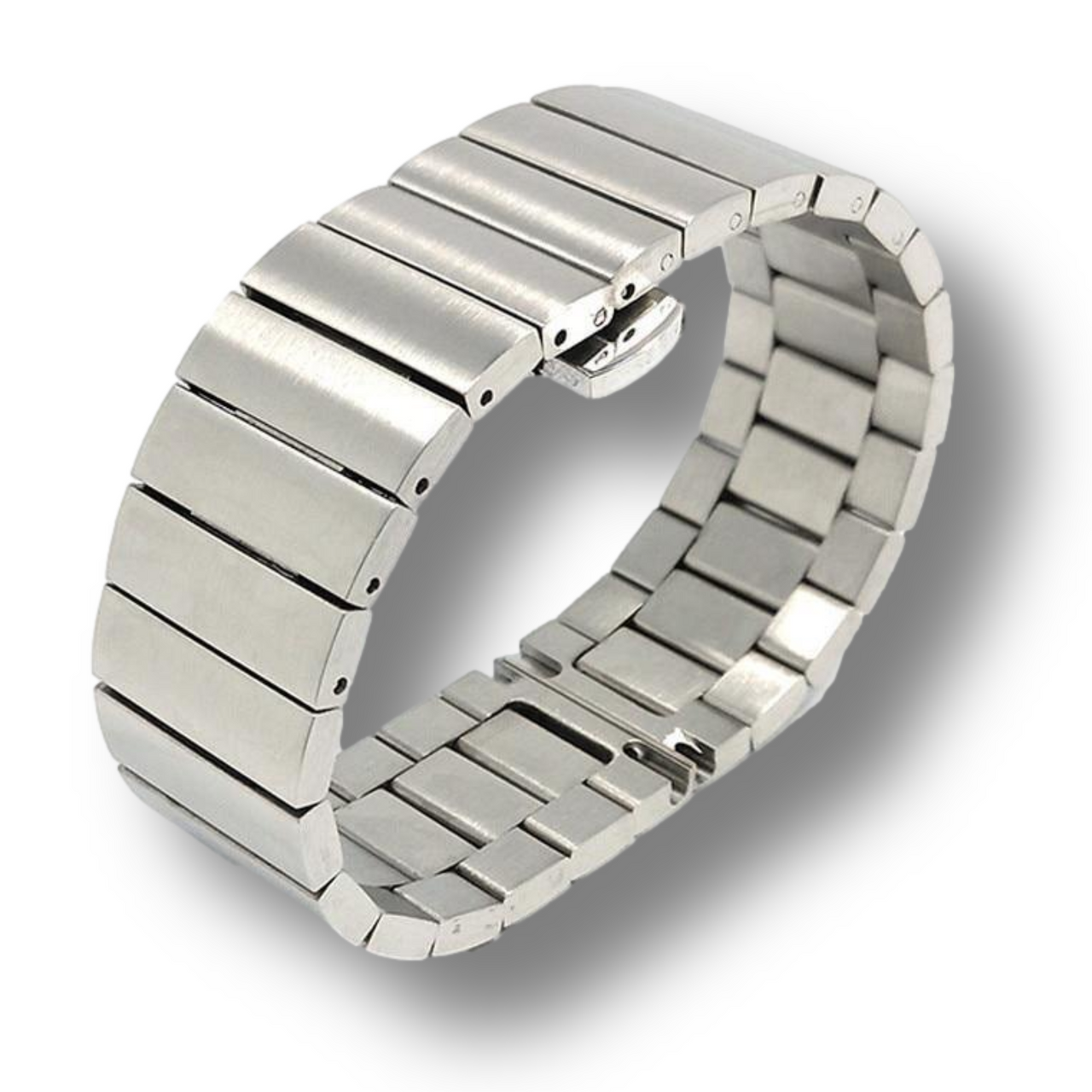
- You can adjust most metal watch bands using common household items like paperclips, thumbtacks, or sturdy sewing needles.
- Always look for the directional arrows on the underside of the links to know which way to push the pins.
- Micro-adjustments on the clasp are the easiest way to achieve a perfect fit without removing entire links.
- While DIY methods work, using a dedicated watch tool kit is the safest way to prevent scratching your timepiece.
You have just received a stunning new timepiece, or perhaps you have finally upgraded to one of our premium stainless steel watch bands. You put it on your wrist, only to realize it is sliding down your forearm or cutting off your circulation. The excitement quickly turns to a minor frustration: you do not have a professional watch repair kit on hand.
The good news is that you do not necessarily need to visit a jeweler or wait for a shipping delivery to get that perfect fit. Knowing how to adjust metal watch band without tools is a handy skill for any watch enthusiast. With a little patience and a few common household items, you can resize your bracelet in minutes. In this guide, we will walk you through the improvised methods for link removal and clasp adjustments, while highlighting when it is better to opt for professional equipment.
Table of Contents
- Understanding Your Metal Watch Band Types
- Gathering Your Improvised Household Tools
- Step-by-Step: How to Remove Links Without Tools
- Adjusting the Clasp: The Easiest "No-Tool" Fix
- Butterfly vs. Fold-Over Clasp Adjustments
- Safety Tips and Avoiding Damage
- When to Use Proper Watch Tools
- Frequently Asked Questions

Understanding Your Metal Watch Band Types
Before you start poking at your watch with a paperclip, you must identify what kind of band you are working with. Not all metal bands are adjusted the same way. Most stainless steel watch bands use one of three systems:
- Split Pins (Cotter Pins): These are the most common. You will see small holes on the side of the links. One end of the pin looks like it has a "seam" or a split.
- Friction Pins: Solid bars held in by internal pressure. These look the same on both sides.
- Screw-in Pins: These require a tiny screwdriver and cannot safely be adjusted without one. If you see a screw head, stop immediately and look into a watch tool kit.
If your band has arrows engraved on the inside of the links, you are in luck. These arrows indicate the direction the pin must be pushed out. Attempting to push them the opposite way can jam the pin or damage the link permanently.
Gathering Your Improvised Household Tools
When we talk about how to adjust metal watch band without pins or professional pliers, we are essentially looking for high-tensile, thin objects that can mimic a spring bar tool or a link remover. Look around your house for the following:
- A Sturdy Paperclip: Straighten one end. This is the gold standard for DIY watch repair.
- A Thumbtack or Pushpin: The pointed end is perfect for micro-adjustments on the clasp.
- A Sewing Needle: Use a thicker needle to avoid snapping it. This works well for very tight tolerances.
- A Small Hammer or Heavy Object: You may need something to gently tap the improvised tool. A heavy spoon or the handle of a screwdriver can work.
- A Soft Surface: A microfiber cloth or a mousepad will prevent your watch face from scratching while you work.
While these items work in a pinch, they lack the precision of a professional link remover. If you find yourself struggling or the pins feel "stuck," do not force them. Excessive force with a paperclip is the leading cause of "DIY scratches" on luxury bands.

Step-by-Step: How to Remove Links Without Tools
This process is specifically for bands with split pins. This is the most requested method for how to adjust metal watch band without tools.
Step 1: Measure the Fit
Put the watch on and pinch the excess links together until the watch sits comfortably on your wrist. Count how many links need to come off. If you need to remove two links, it is best to remove one from each side of the clasp to keep the clasp centered on your wrist.
Step 2: Position the Watch
Lay the watch on its side on your soft surface. Ensure the arrows on the back of the links are pointing down toward the table or away from the direction you are pushing.
Step 3: Push the Pin
Take your straightened paperclip or thumbtack. Place the tip into the hole on the side of the link (the side opposite the direction of the arrow). Apply steady, downward pressure. If the pin is stubborn, use a heavy object to gently tap the top of your paperclip.
Step 4: Pull the Pin Out
Once the pin protrudes from the other side, you can usually pull it out with your fingers or a pair of household tweezers. Set the pin aside carefully—you will need it later!
Step 5: Repeat and Reconnect
Remove the necessary number of links. To reconnect the band, align the links and insert the pin against the direction of the arrow. Use the flat side of a heavy object to push the pin back in until it is flush with the link.
Adjusting the Clasp: The Easiest "No-Tool" Fix
Sometimes, removing a whole link makes the watch too tight, but leaving it on makes it too loose. This is where the micro-adjustments on the clasp come in. This is much easier to do without professional tools.
Look at the side of your watch clasp. You will likely see 3 to 5 small holes in a row. Inside these holes is a spring bar holding the band to the clasp. To adjust this:
- Take a thumbtack or a toothpick.
- Push the end of the spring bar through the hole. It should compress.
- Carefully slide the band to the next hole while keeping the spring bar compressed.
- Let the spring bar "click" into the new hole. Repeat on the other side of the clasp if necessary.
This is the most effective way to fine-tune stainless steel watch bands for a bespoke feel. For more technical details on watch mechanics, check out our Watch Compendium.

Butterfly vs. Fold-Over Clasp Adjustments
The type of clasp you have determines how much flexibility you have for "tool-less" adjustments.
Fold-Over Clasps: These are very common on diver watches and sports watches. They almost always feature the micro-adjust holes mentioned above. These are the most user-friendly for DIY adjustments.
Butterfly Clasps: These are hidden clasps that meet in the middle. They look seamless and elegant but rarely have micro-adjust holes. To adjust these, you must remove links. If the watch is still slightly off, look for "half-links" that many manufacturers include near the clasp. These are adjusted exactly like full links but provide a finer fit.
Safety Tips and Avoiding Damage
When learning how to adjust metal watch band without tools, the biggest risk is cosmetic damage. Here is how to stay safe:
- Tape the Links: Place a small piece of clear tape over the link you are working on. Poke the paperclip through the tape. This protects the steel if the paperclip slips.
- Never Force It: If the pin doesn't move with moderate pressure, it might be a screw-in pin or a rusted friction pin. Forcing it will bend your paperclip and likely gouge the watch.
- Work in a Tray: Watch pins are tiny and love to roll off tables. Work inside a shallow tray or on a high-pile towel to catch any falling parts.
- Mind the "Sleeves": Some high-end watches (like Seiko or Omega) use a "pin and collar" system. There is a tiny metal sleeve inside the link. If you lose this, the pin will never stay in place again.
When to Use Proper Watch Tools
While we have shown you how to adjust metal watch band without pins or specialized gear, there is a reason professional tools exist. A paperclip is round and soft; a professional link remover is hardened steel and perfectly aligned.
You should stop and buy a watch tool kit if:
- You are working on a luxury watch (Rolex, Omega, Tudor, etc.) where a scratch could devalue the piece by hundreds of dollars.
- The band uses tiny screws instead of pins.
- The pins are recessed deep within the links and your paperclip isn't long enough.
- You plan on changing your watch accessories frequently.
A dedicated kit usually includes a link remover, a spring bar tool, and specialized tweezers, making the process faster and 100% safer for your watch collection.

Frequently Asked Questions
Can I use a toothpick to adjust my watch band?
A toothpick is excellent for micro-adjustments on the clasp because the wood is softer than the steel and won't scratch it. However, a toothpick is usually too thick and too weak to push out the link pins. For link removal, a paperclip or needle is better.
Which way do I push the pins out?
Always look for the arrows on the inner side of the links. You must push the pin in the direction the arrow is pointing. When putting the pin back in, insert it in the opposite direction of the arrow.
What if my watch band doesn't have arrows?
If there are no arrows, look closely at the holes on the side of the links. One side will likely look like a solid pin, while the other looks like it has a split or a "head." Push from the solid side so the split side comes out first. If it is a screw-type link, you will see a flat-head screw slot.
Is it safe to adjust a luxury watch without tools?
Technically yes, but it is not recommended. The metals used in high-end watches can still be scratched by a slipping paperclip or thumbtack. For expensive pieces, investing in watch accessories like a proper pin pusher is a small price to pay for peace of mind.
How do I know if I need to remove a link or just use the micro-adjust?
The micro-adjust usually accounts for about half the length of a full link. If the watch is sliding around significantly, you need to remove a link. If it is just a "little bit" loose or feels tight during hot weather (when your wrist swells), use the micro-adjust holes on the clasp.
Ready for a New Look?
Now that you know how to get the perfect fit, why not expand your collection? A new strap can make an old watch feel brand new. Explore our full range of durable, stylish, and easy-to-adjust stainless steel watch bands today and find the perfect match for your favorite timepiece.
Related reading: watch accessories collection | leather watch bands | NATO watch bands | Apple Watch bands | silicone watch bands
📌 Complete Guide
For the full guide, see our Stainless Steel Watch Bands Complete Guide 2026.
📌 Complete Guide
For the full guide, see our Stainless Steel Watch Bands Complete Guide.
📌 Complete Guide
For the full guide, see our Leather Watch Bands Complete Guide.
📌 Complete Guide
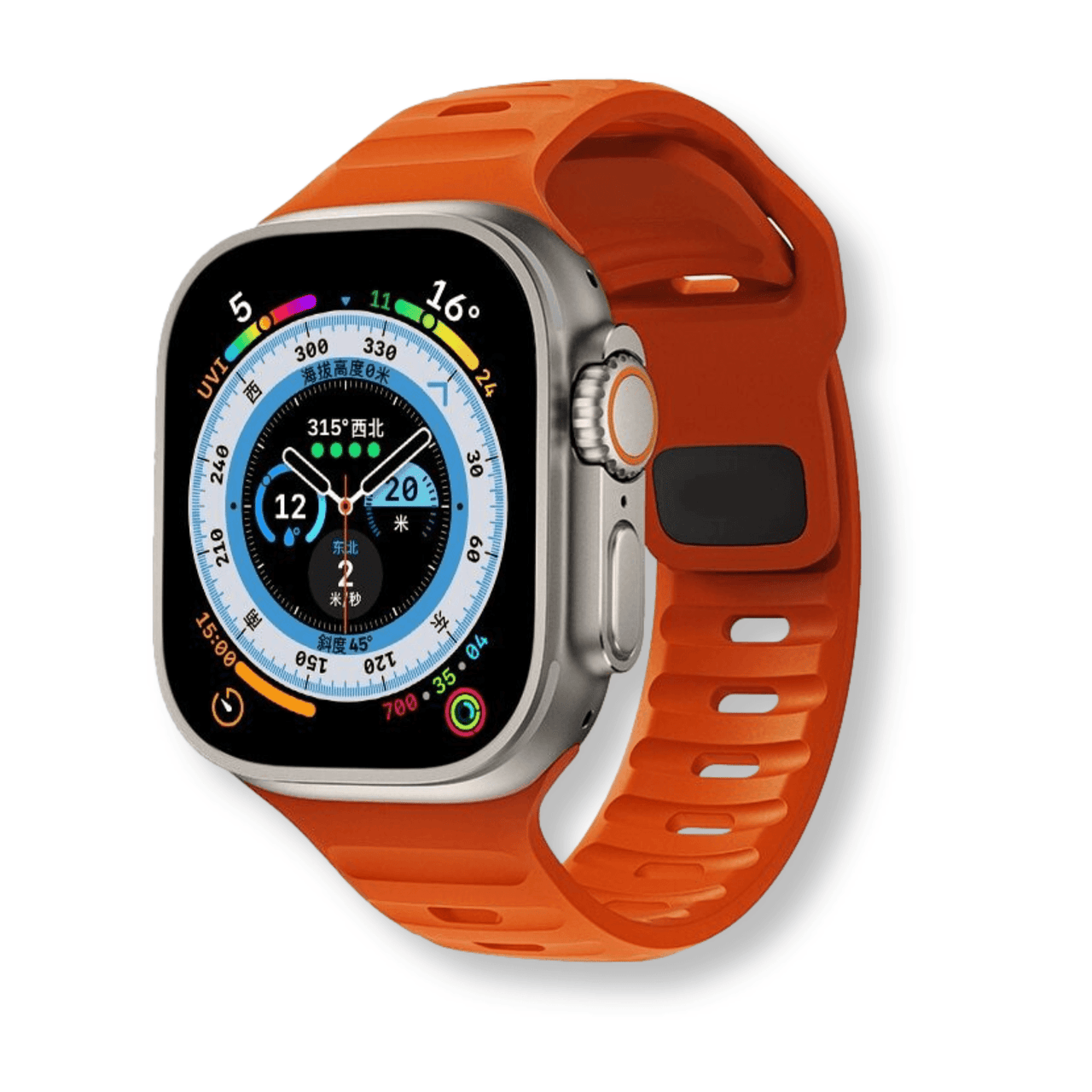
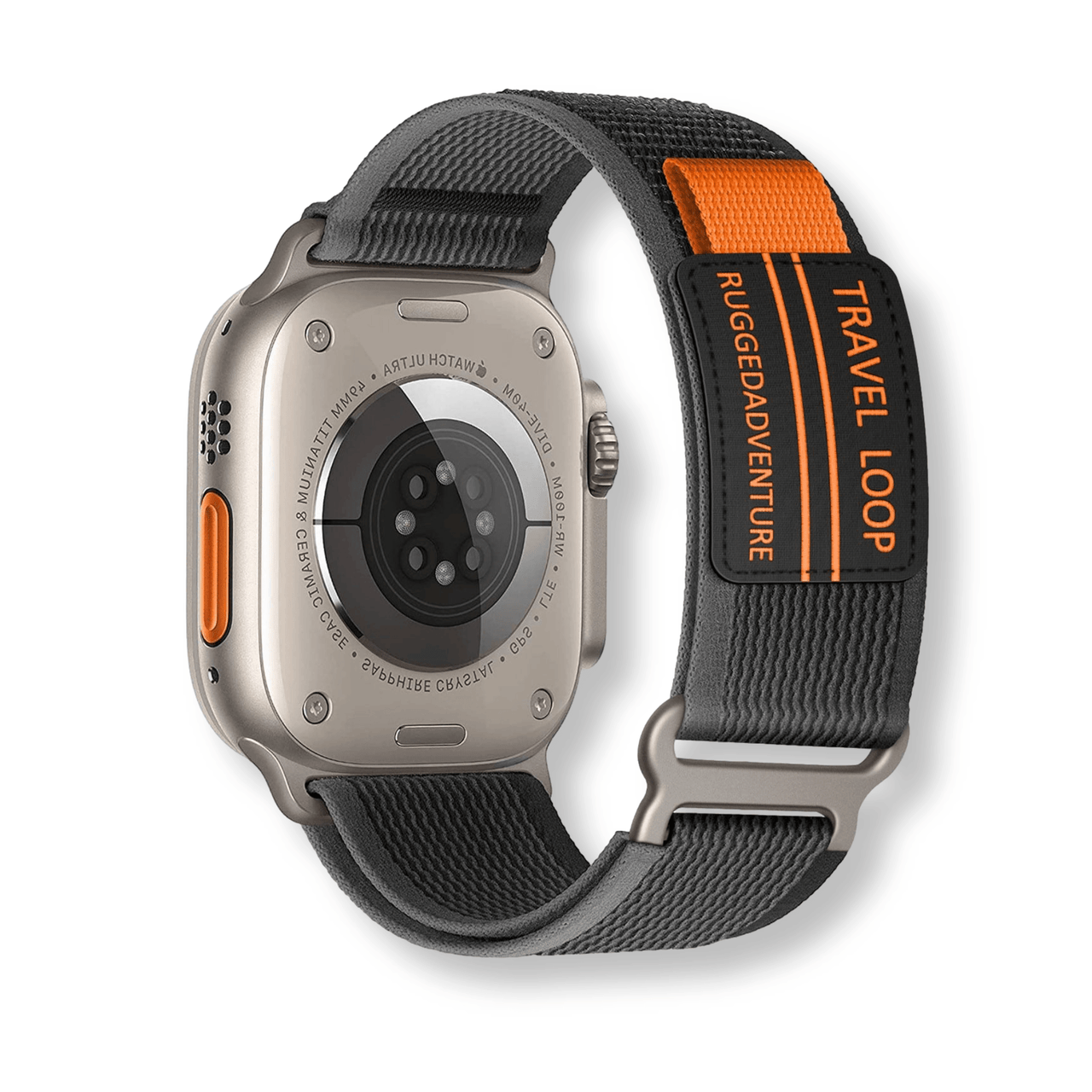
For the full guide, see our Apple Watch Bands Compatibility Guide.