A stainless steel bracelet can change a watch's weight, appearance and fit. Choosing one requires more than matching the advertised width. The end links must suit the case, the attachment hardware must be correct, and the sizing system must allow a comfortable fit. Material grade alone does not establish any of those things.
Confirm the complete fit
Start with the exact watch reference. A straight-ended bracelet and a shaped end-link bracelet are not interchangeable simply because they share a width. Check end shape, attachment position, case clearance and required bars or screws. Ask for documented compatibility rather than assuming a family name or similar photograph proves fit.
Do not file end links, bend bars or substitute hardware to force an uncertain match. If the seller cannot explain the attachment, obtain advice from the watch manufacturer or a qualified service provider. A bracelet that appears installed but is not properly secured risks the watch.
Compare construction, not slogans
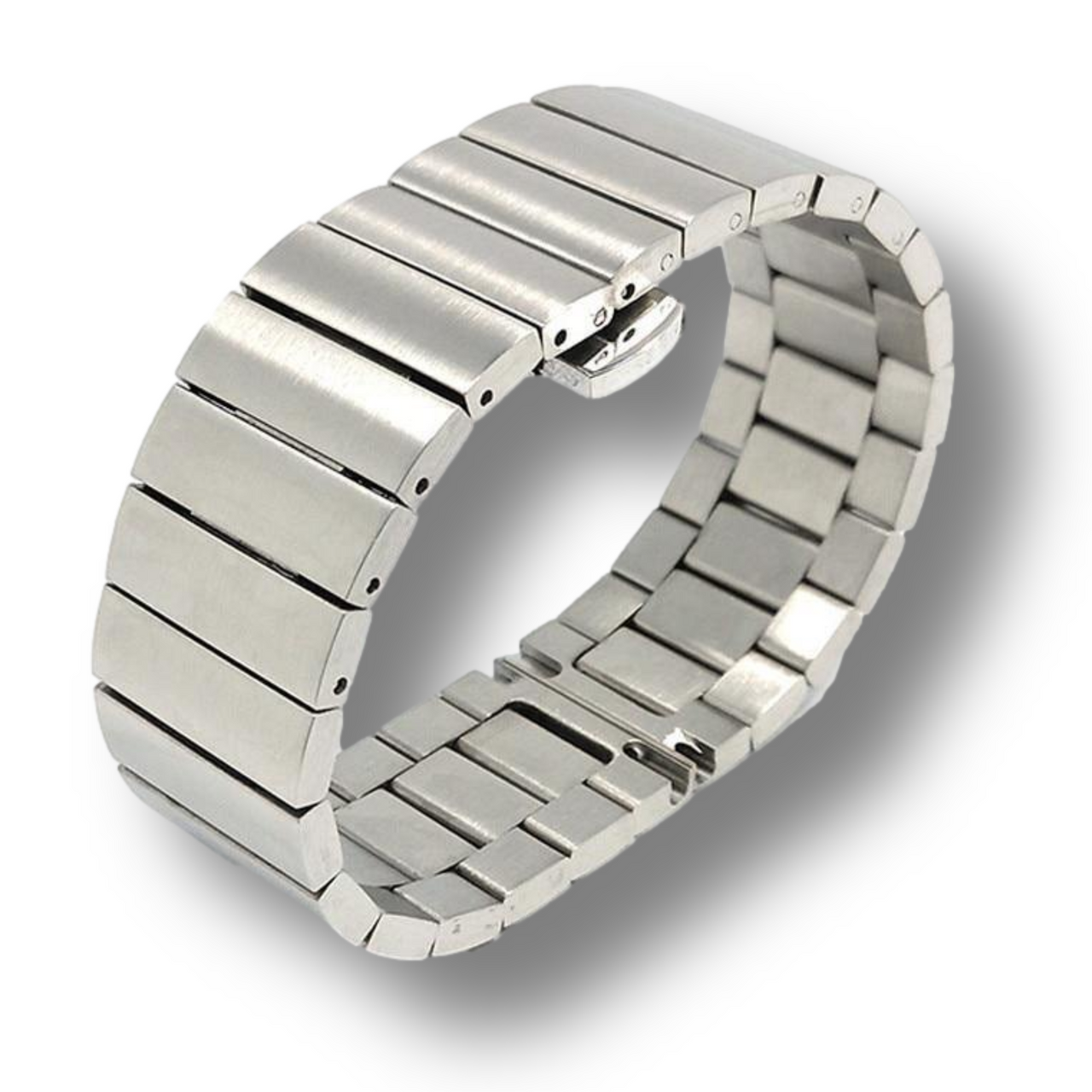
Look at how links articulate, how edges are finished and how the clasp operates. Solid, folded and mesh constructions can feel different; none is guaranteed not to pull hair or catch skin. Consider total weight and how the bracelet balances the watch head. The most substantial bracelet is not automatically the most comfortable.
Material descriptions such as 316L, 904L or “surgical steel” do not establish that a complete bracelet is suitable for every wearer or environment. Ask about the actual alloy, coating and clasp components when those details matter. Do not interpret “stainless” as immune to corrosion, wear or scratches.
Skin sensitivity and fit
A steel designation is not a personal allergy guarantee. Apple's wearing guidance discusses sensitivity to materials including nickel in some watch components; its advice is specific to its products, but illustrates why component information matters. If you have a known sensitivity, obtain the relevant specifications and professional advice rather than relying on a hypoallergenic slogan.
Adjust the bracelet so it is comfortable and does not create sustained pressure. A clasp with fine adjustment may help accommodate changes during the day, but confirm the range and mechanism on the actual product. Stop wearing a bracelet that irritates the skin or has sharp edges.
Identify the sizing mechanism
Link bracelets may use screws, friction pins, pin-and-collar systems or manufacturer-specific designs. Mesh bracelets can use different adjustable clasps. Do not assume that every visible hole accepts a push-pin tool or that every slotted part should turn freely.
Consult the exact instructions before removing links. Small collars and other parts can be essential to retention; losing them can leave an apparently assembled bracelet insecure. Keep removed links and parts with the watch records. Use professional sizing when the mechanism is unclear, seized or unfamiliar.
Water use is not automatic
A steel bracelet does not make a watch suitable for swimming or diving. Check both the bracelet's guidance and the watch's separate water-resistance condition. Coatings, plated areas, clasps and other components may require different care. Follow the manufacturer's instructions after water exposure rather than treating all metal assemblies alike.
Cleaning without refinishing
Begin with the maker's care instructions. A gentle surface wipe is different from soaking a detached bracelet or using an ultrasonic cleaner. Do not immerse a watch head merely because its bracelet is metal, and do not detach unfamiliar hardware solely for cleaning.
Avoid abrasive pads, fiberglass brushes, polishing compounds or aggressive chemicals unless the manufacturer explicitly permits the procedure. They can alter a brushed grain, polished surface or coating. Cleaning removes dirt; refinishing changes the surface. Seek a qualified assessment for scratches rather than promising a home method will restore the factory finish.
Buying and maintenance checklist
- Exact reference, end-link shape and correct attachment parts.
- Usable length, sizing mechanism and adjustment range.
- Material and coating information, including clasp components.
- Comfortable weight and smooth edges.
- Documented care instructions and written seller terms.
Inspect attachments, links and clasp periodically and after a knock. Stop using loose or damaged components. No fixed price tier, alloy label or polished appearance guarantees a lifetime of service.
Related guides
- Leather alternatives
- NATO alternatives
- Magnetic steel band construction
- Expandable bracelet mechanisms
- Closures for limited dexterity
Sources
📌 Complete Guide
For the full guide, see our Stainless Steel.