- Durability: FKM rubber is significantly more resistant to chemicals, heat, and tearing than standard silicone.
- Comfort: Silicone is softer and more flexible, while rubber provides a more structured, premium feel.
- Maintenance: Silicone tends to attract lint and dust due to static electricity; rubber stays cleaner for longer.
- Best Use: Silicone is ideal for light exercise and budget-friendly swaps; rubber is the gold standard for diving and luxury tool watches.
- Longevity: A high-quality rubber strap will generally outlast a silicone strap by several years under heavy use.

Table of Contents
- What Is a Rubber Watch Strap?
- What Is a Silicone Watch Strap?
- Rubber vs Silicone: Durability & Longevity Compared
- Comfort & Skin Feel: Which Wins for All-Day Wear?
- Water Resistance & Sports Performance
- Style & Aesthetics: Which Looks Better?
- Which Material Is Right for You?
What Is a Rubber Watch Strap?
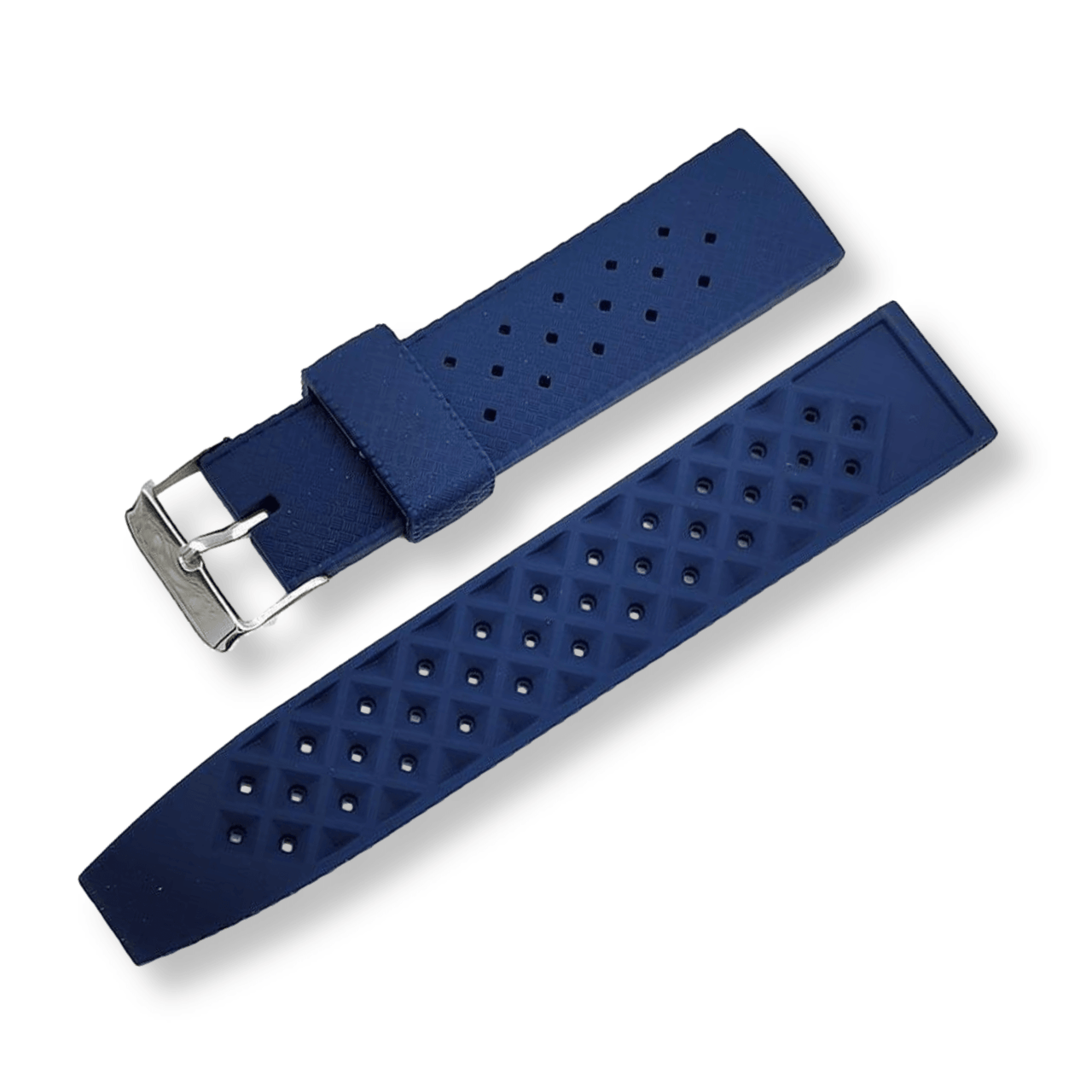
When enthusiasts discuss a rubber watch strap, they are usually referring to one of three primary synthetic compounds: FKM, NBR, or EPDM. Unlike natural rubber, which can become brittle over time, these synthetic variants are engineered for maximum resilience in harsh environments. FKM (Fluoroelastomer) is the "Ferrari" of rubber materials, frequently used by luxury brands like Rolex and IWC. It is incredibly dense, heavy, and resistant to almost everything from salt water to UV rays.
NBR (Nitrile rubber) is another common choice, often called "Isofrane" style after the famous diving straps of the 1960s. It is highly resistant to oils and acids, making it perfect for industrial or professional diving use. Finally, EPDM is known for its excellent weather resistance. Choosing a rubber strap usually means you are prioritizing a "tool watch" aesthetic where the band needs to be as tough as the watch case itself. For more technical details on watch components, check out our watch compendium.
What Is a Silicone Watch Strap?
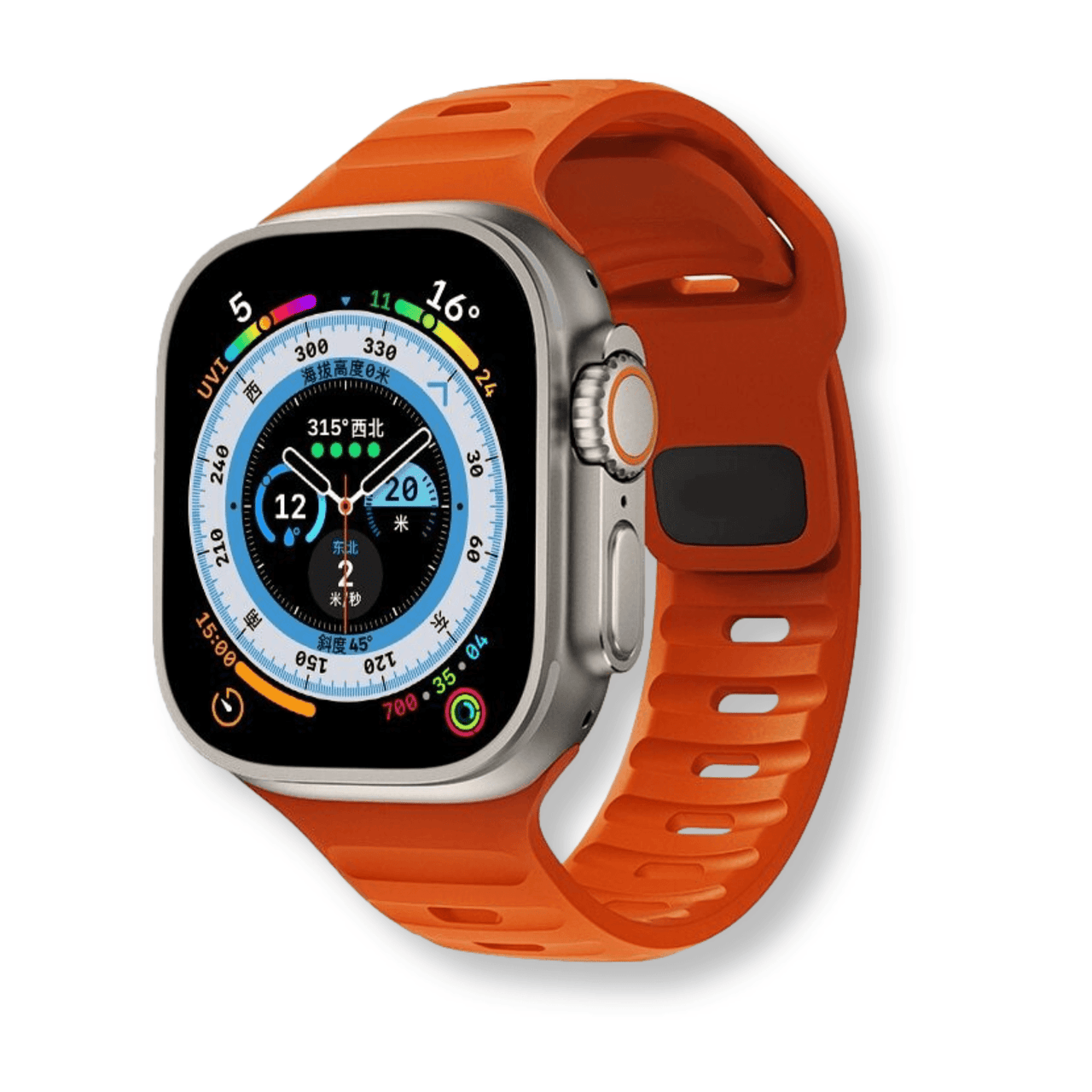
A silicone watch strap is made from a synthetic elastomer composed of silicon, carbon, hydrogen, and oxygen. It is widely popular in the smartwatch industry and among fitness enthusiasts because it is incredibly inexpensive to produce and offers a high degree of flexibility. If you have ever bought an entry-level fitness tracker, chances are it came with a silicone band.
Silicone is prized for its "soft-touch" finish. It is highly pliable, meaning it wraps around the wrist with almost zero break-in period. Because it is easy to mold and color, silicone watch bands come in a massive variety of vibrant shades and textures that are harder to achieve with denser rubber compounds. However, this softness comes at a cost: silicone is a lower-density material, which affects how it interacts with the environment and your skin over long periods of time.
Rubber vs Silicone: Durability & Longevity Compared
In the battle of rubber vs silicone durability, rubber—specifically FKM—is the clear winner. Silicone is prone to "splitting." If a small nick or tear develops in a silicone band, the material's low tensile strength means the tear will quickly spread until the strap snaps. Rubber, being much denser, resists tearing and can withstand significantly more tension before failing.
Chemical resistance is another major factor. Silicone can be damaged by certain oils, perfumes, and even high concentrations of sweat over time, which may cause the material to become sticky or warped. In contrast, FKM rubber is virtually inert. It won't react to skin oils or sunblock, and it maintains its shape even after years of exposure to extreme heat or freezing temperatures. If you are looking for watch band materials that will last a decade rather than a season, rubber is the superior investment.

Comfort & Skin Feel: Which Wins for All-Day Wear?
Comfort is subjective, but there are distinct differences in how these materials feel against the skin. Silicone is famous for its "buttery" softness. It stretches slightly, which is excellent for finding that perfect fit between lug holes. However, silicone has a high coefficient of friction, which can make it feel "sticky" or "tacky" against the skin, especially when you sweat. It also acts as a magnet for lint, pet hair, and dust, which can be irritating for some users.
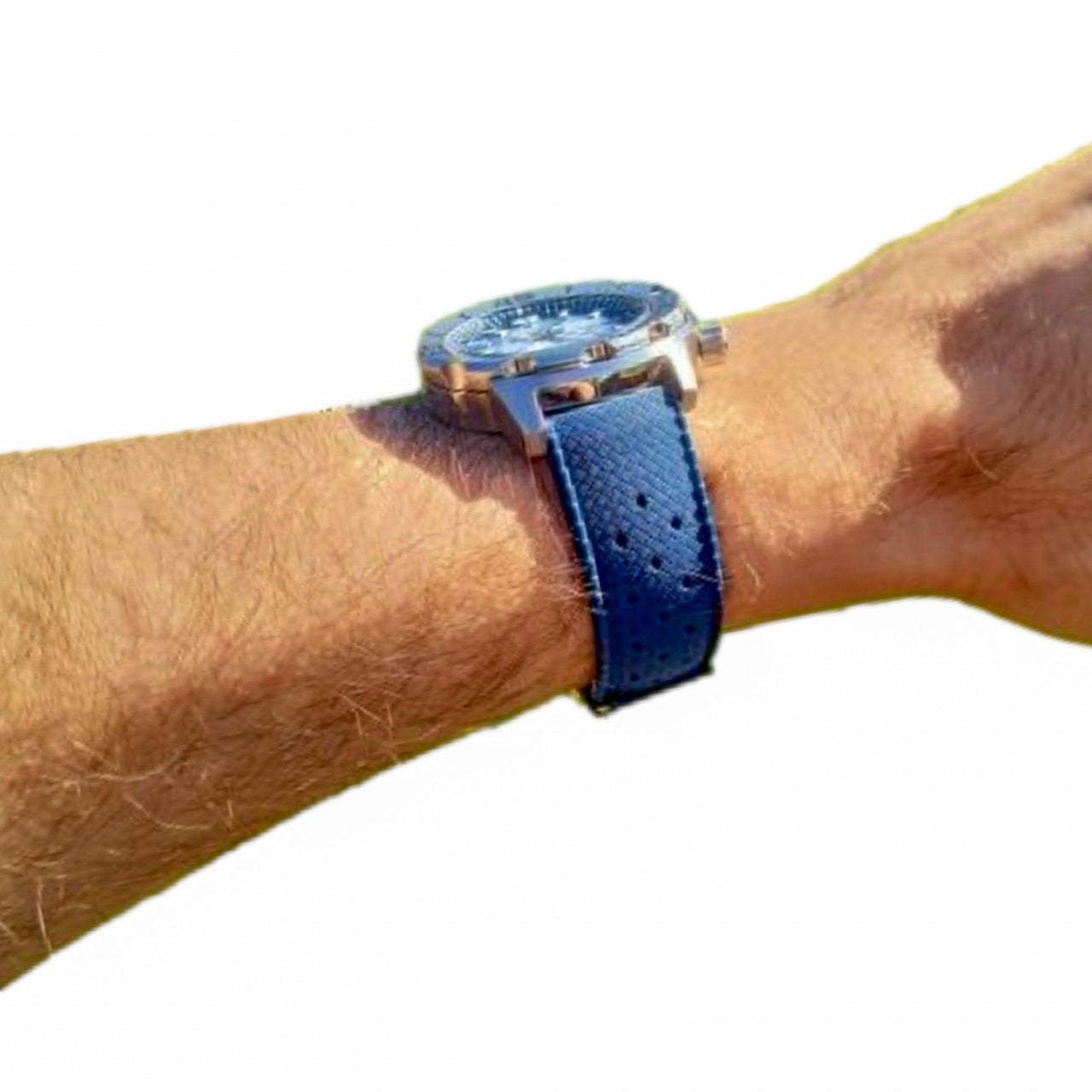
A high-quality rubber watch strap feels more substantial. While it isn't as "squishy" as silicone, it has a smooth, silk-like finish that doesn't grab at arm hair or attract debris. Most premium rubber straps are designed with ventilation channels on the underside to allow the skin to breathe. For many enthusiasts, the extra weight of a rubber strap provides a better balance for heavy stainless steel dive watches. Don't forget to pair your strap with high-quality watch accessories to ensure a secure fit.

Water Resistance & Sports Performance
Both materials are 100% waterproof, making them the best watch strap material choices for swimming and diving compared to leather or fabric. However, their performance in active scenarios differs. Silicone’s elasticity is a double-edged sword; while it moves with your wrist during a workout, it can also allow a heavy watch head to "bounce" or slide around if you are running or performing high-impact movements.
Rubber straps, particularly NBR and FKM, are the choice of professional divers for a reason. They stay exactly where you put them. They are also much more resistant to the salt-water corrosion that can eventually degrade cheaper plastics. If your "sport" involves more than just a casual jog—such as rock climbing, diving, or heavy lifting—the structural integrity of rubber provides the security you need to ensure your timepiece stays on your wrist.
Style & Aesthetics: Which Looks Better?
The rubber watch strap vs silicone debate often comes down to the "look." Silicone straps often have a matte, slightly translucent, or "flat" appearance. Because they are molded at lower pressures, the edges may not be as crisp. They are perfect for a casual, sporty look or when you want a bright, neon pop of color to match your gym gear.
Rubber straps offer a much more refined aesthetic. The molding process for FKM rubber allows for incredibly sharp lines, intricate "waffle" or "tropic" patterns, and a deep, rich color saturation that doesn't fade. A black FKM rubber strap can look surprisingly sophisticated, even when paired with a "desk diver" at the office. If you own a luxury timepiece, a premium rubber strap preserves the high-end feel of the watch, whereas a cheap silicone band might make an expensive watch look like a toy.
Which Material Is Right for You?
Choosing between these two depends on your budget and how you use your watch. Use the table below to help make your decision:
| Feature | Silicone | FKM/NBR Rubber |
|---|---|---|
| Price | Affordable / Budget | Premium / Mid-range |
| Dust Resistance | Low (Attracts lint) | High (Stays clean) |
| Durability | Moderate (Can tear) | Exceptional |
| Flexibility | Very High | Moderate to High |
If you want variety and low cost, go with silicone. If you want a "set and forget" strap that handles everything life throws at it, browse our FKM rubber watch straps for the ultimate upgrade.

Frequently Asked Questions
Does silicone or rubber last longer?
Rubber, especially FKM synthetic rubber, lasts significantly longer than silicone. Silicone is prone to tearing and environmental degradation, whereas rubber is engineered to withstand chemicals, UV rays, and extreme temperatures without losing its shape.
Why does my silicone watch strap get so dusty?
Silicone has natural static properties that attract dust, lint, and pet hair. High-quality rubber straps are treated or composed of materials that do not hold a static charge, keeping them looking cleaner for longer.
Is FKM rubber worth the extra cost?
Yes. FKM rubber is denser, more comfortable, and virtually indestructible compared to standard silicone. For owners of mid-to-high-end watches, the increased durability and premium feel justify the higher price point.
Can I swim with both rubber and silicone straps?
Absolutely. Both materials are completely waterproof and will not soak up moisture like leather or nylon. However, rubber is more resistant to the long-term effects of salt water and chlorine.
Which is better for sensitive skin?
Silicone is generally hypoallergenic, but its "sticky" texture can trap sweat and bacteria against the skin, causing irritation. Rubber straps with molded ventilation channels often provide better airflow, which can be better for sensitive skin during exercise.
Ready to Upgrade Your Strap?
Whether you prefer the soft flexibility of silicone or the rugged durability of FKM rubber, we have the perfect fit for your timepiece.
Related Guides and Collections
\nIf you want to compare materials, fit, and installation options, these internal resources are a good next step.
\n- silicone watch bands
- Apple Watch bands collection
- Fitbit bands collection
- Huawei watch bands collection
- leather watch bands
📌 Complete Guide
For the full guide, see our Silicone.
📌 Complete Guide
For the full guide, see our Silicone.
📌 Complete Guide
For the full guide, see our Silicone.
📌 Complete Guide
For the full guide, see our Silicone.