Finding the correct watch band size is the most critical step in refreshing the look of your timepiece. While aesthetic choices like color and material are subjective, the physical fit of a strap is a matter of precise measurement. A band that is even one millimeter too wide will not fit between the lugs of your watch, while a band that is one millimeter too narrow will slide back and forth, creating an unsightly gap and potentially putting stress on the spring bars. This guide provides a comprehensive overview of standard watch band sizes, ranging from 16mm to 24mm, to help you identify the exact width required for your specific watch model.
How Watch Band Size Works
Watch band size is determined by the distance between the lugs of the watch case. The lugs are the two metal protrusions that extend from the watch body to hold the strap or bracelet in place. When people refer to a 20mm watch band, they are referring to the width of the strap at the point where it connects to the watch head. It is important to distinguish this measurement from the length of the strap or the diameter of the watch case itself.
Most traditional watches use standard even-numbered lug widths, such as 18mm, 20mm, or 22mm. However, many luxury and vintage brands utilize odd-numbered widths like 19mm or 21mm. Understanding your lug width is the first step in browsing all watchbands to find a suitable replacement. You can also explore the how to determine watch band size guide for a deeper look at the technical aspects of strap fitment.
Another factor to consider is the taper of the band. Many straps are wider at the lugs and narrower at the buckle. For example, a 20mm strap might taper down to 18mm at the clasp. This is an aesthetic choice and does not affect whether the band will fit your watch, but it is something to keep in mind if you intend to reuse your original buckle. For a broad overview of different styles, you may want to consult the vintage heritage watch band replacement guide which discusses how sizing has evolved over the decades.
How to Measure Lug Width
To ensure a perfect fit, you must measure the internal distance between the lugs of your watch. Accuracy is paramount, as a mistake of just one millimeter can render a new strap unusable. There are two primary methods for measuring lug width: using a metric ruler or using digital calipers.
Using a Metric Ruler
If you do not have specialized tools, a standard metric ruler is the most accessible option. Ensure the ruler uses millimeters (mm) rather than inches. Place the zero mark on the inside of one lug and measure the distance to the inside of the opposite lug. Do not measure from the outside of the lugs, as this will give you an incorrect, larger reading. It is often helpful to take this measurement while the current strap is removed to get a clear line of sight. For more detailed fit instructions, refer to our guide on how to determine watch band size.
Using Digital Calipers
Digital calipers are the most accurate tool for measuring watch components. By placing the internal measurement jaws of the calipers between the lugs, you can get a reading accurate to a fraction of a millimeter. This is particularly useful for identifying odd-sized lugs like 19mm or 21mm, which can sometimes look like 20mm to the naked eye when using a standard ruler.
The Paper Test
If you are unsure of your measurement, you can perform a simple paper test. Cut a strip of paper that you believe matches your lug width (e.g., 20mm). Try to insert the paper between the lugs. If it fits perfectly without folding or leaving a gap, you have identified the correct size. If it bunches up, the lugs are likely narrower. If there is visible space on either side, the lugs are wider.
Why 1mm Matters
In the world of horology, precision is everything. You might be tempted to buy a 20mm strap for a watch with 19mm lugs, thinking you can squeeze it in. While this is sometimes possible with soft materials like silicone or thin leather, it is generally discouraged. Squeezing a strap causes the material to bunch, which can lead to premature wear and makes it difficult for the spring bar to seat properly in the lug holes. This increases the risk of the watch falling off your wrist.
Conversely, using a strap that is too narrow is equally problematic. A 19mm strap on a 20mm watch leaves a 0.5mm gap on either side. This allows the strap to slide along the spring bar. Over time, this movement can act like a saw, wearing down the spring bar or even the lug holes themselves. Furthermore, it exposes the thin ends of the spring bars, making them more likely to snag on clothing and pop out. Always aim for an exact match. If your watch has a specific requirement, such as those found in the Citizen Eco-Drive watch bands compatible straps list, it is best to follow the manufacturer specifications exactly.
Quick Size Chart by Width
The following table provides a quick reference for common watch band sizes and the types of watches they typically accommodate.
| Lug Width | Common Watch Category | Typical Case Diameter |
|---|---|---|
| 16mm | Women's watches, vintage dress watches | 28mm - 34mm |
| 18mm | Small men's watches, vintage Seiko/Rolex | 34mm - 37mm |
| 19mm | Vintage chronographs, mid-century luxury | 36mm - 39mm |
| 20mm | Modern standard, most sports and divers | 38mm - 42mm |
| 21mm | Modern luxury (Orient, Longines, Rolex) | 39mm - 43mm |
| 22mm | Large dive watches, modern chronographs | 42mm - 46mm |
| 24mm | Oversized watches, Pilot watches, Panerai | 44mm+ |
16mm Watch Bands
The 16mm width is a standard size for many women's timepieces and smaller vintage men's watches from the early 20th century. During the mid-1900s, it was common for men's dress watches to have smaller diameters, often ranging from 30mm to 33mm, which naturally paired with a 16mm strap. Today, this size is frequently seen on elegant dress watches that prioritize a slim profile and a refined aesthetic.
When selecting a 16mm band, leather is often the preferred choice because it complements the formal nature of smaller watches. A 16mm leather watch band provides a classic look that works well with gold or silver cases. For those seeking more durability or a more modern feel, a 16mm stainless steel watch band can add significant weight and presence to a smaller watch. You can browse our full selection of 16mm watchbands to find the right match for your timepiece.
18mm Watch Bands
The 18mm size is perhaps the most iconic width in the history of horology. It was the standard for men's watches for several decades, particularly from the 1940s through the 1970s. Many legendary watches, including vintage Seiko 5 models and older Rolex Datejusts, utilize 18mm lugs. It provides a balanced look that is neither too delicate nor too bulky.
Because of its popularity in the vintage market, there is a massive variety of styles available in this size. For a traditional look, an 18mm leather watch band is a staple. If you prefer a more utilitarian or sporty appearance, a 18mm stainless steel watch band is a robust choice. Many modern users also opt for an 18mm quick release watch band, which allows for tool-free strap changes in seconds. Explore the complete range of 18mm watchbands to see all available options.
19mm Watch Bands
The 19mm lug width is often referred to as an "odd" size, though it is quite common among certain prestigious brands. Manufacturers like Omega, Grand Seiko, and Rolex have historically used 19mm lugs on models that sit between standard size categories. This width is frequently found on vintage chronographs and mid-century luxury pieces where a 20mm strap might look too aggressive and an 18mm strap too thin.
Finding high-quality 19mm straps used to be a challenge, but the market has expanded to meet the needs of collectors. A 19mm leather watch band is the most common replacement for these types of watches, maintaining the original proportions intended by the designer. For those with vintage sports watches, a 19mm stainless steel watch band can offer a period-correct feel. See our curated collection of 19mm watchbands for more variety.
20mm Watch Bands
The 20mm width is the current industry standard for modern watches. If you own a contemporary sports watch, diver, or chronograph with a case diameter between 38mm and 42mm, there is a very high probability it uses a 20mm strap. Iconic watches like the Rolex Submariner and the Omega Speedmaster have cemented this size as the go-to choice for versatility and comfort.
Because 20mm is so prevalent, the options are virtually endless. You can find everything from a rugged 20mm stainless steel watch band for professional diving to a sophisticated 20mm leather watch band for office wear. For those who enjoy matching their watch to their outfit daily, a 20mm quick release watch band is highly recommended. Browse our extensive inventory of 20mm watchbands to find your next favorite strap.
21mm Watch Bands
The 21mm lug width is another uncommon size that has gained popularity in recent years, particularly among luxury brands. It is often used on modern watches with case diameters of 41mm or 42mm where a 20mm strap might appear slightly too narrow for the case's visual weight. Because it is not a standard "even" size, it can be frustrating for owners to find replacements if they do not know where to look.
Common examples of watches requiring this specific width include certain versions of the Orient Bambino and various Longines models. For instance, the Orient Bambino Version 1 lug width is 21mm, as is the Longines Legend Diver 36 and the Longines Spirit Zulu Time 42. If your watch requires this size, it is important to purchase a dedicated 21mm strap rather than trying to force a 22mm band or accepting the gap of a 20mm band.
22mm Watch Bands
The 22mm width is the standard for larger modern watches, particularly dive watches and pilot watches. As watch cases have trended larger over the last two decades, 22mm has become a staple for watches with 42mm to 45mm diameters. This width provides the necessary stability to hold a heavy watch head securely on the wrist without it feeling top-heavy.
For dive watch enthusiasts, a 22mm stainless steel watch band is a classic choice that offers water resistance and durability. If you prefer the comfort of a lighter material, a 22mm leather watch band can significantly change the character of a large watch, making it more suitable for casual or formal wear. Like the 20mm size, the 22mm quick release watch band is a popular option for those who value convenience. Check out our full selection of 22mm watchbands.
24mm Watch Bands
The 24mm size is reserved for oversized timepieces and specific "tool watch" styles. This width is most commonly associated with Panerai watches and large pilot-style watches. A 24mm strap is quite wide and makes a bold statement on the wrist. It is designed to support very large cases, often 44mm or larger, ensuring that the watch remains centered and comfortable during activity.
Given the heavy-duty nature of watches that use this size, many owners look for a 24mm stainless steel watch band for maximum security. However, a thick, high-quality 24mm leather watch band is also a popular choice, especially for the "Paneristi" look. For those who want to swap styles easily, a 24mm quick release watch band is also available. Explore our 24mm watchbands to find the perfect fit for your large-format watch.
Apple Watch, Garmin, Samsung and Fitbit Size Notes
Smartwatches often follow different sizing conventions than traditional mechanical watches. While many of them can use standard straps, they often require specific adapters or have unique mounting systems.
Apple Watch
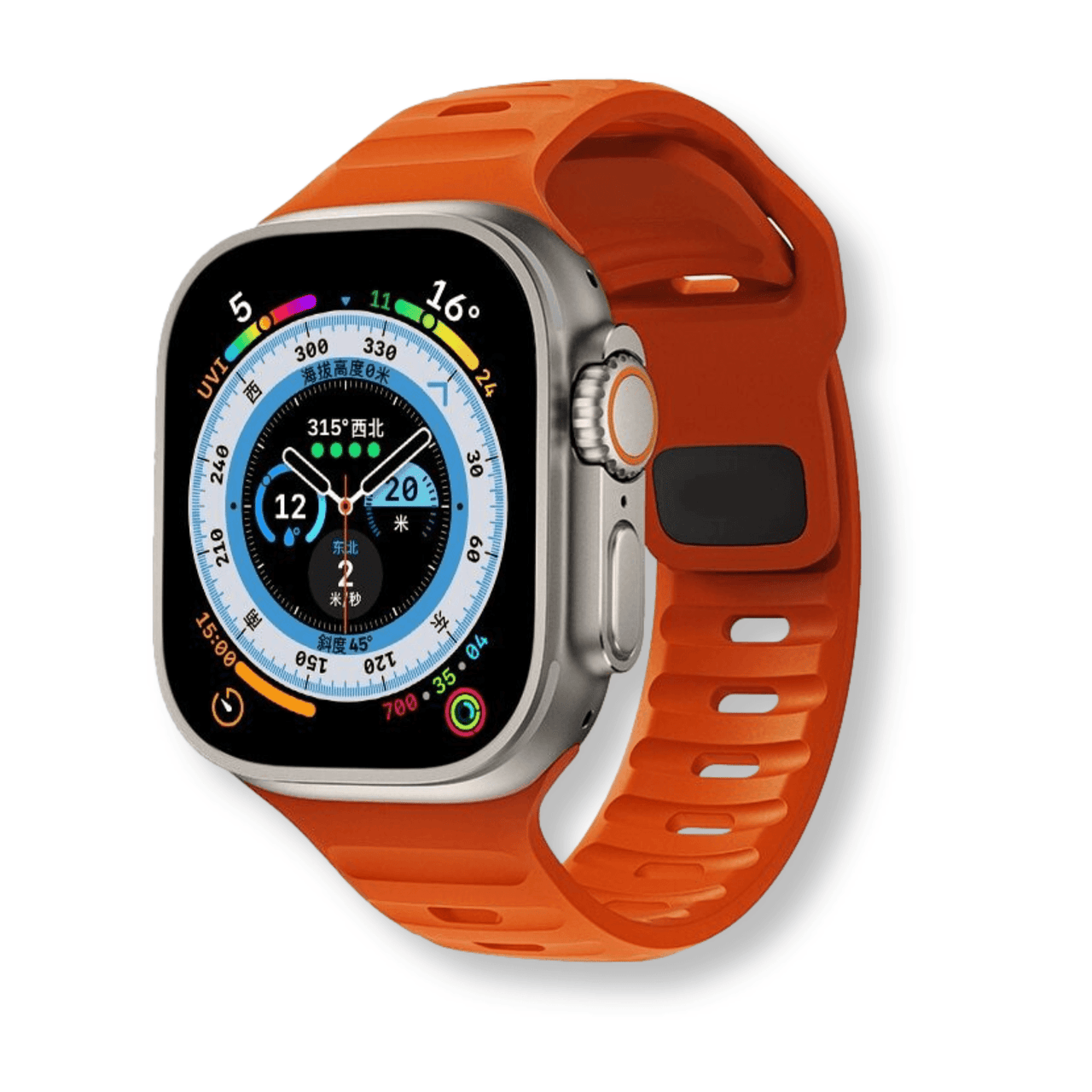
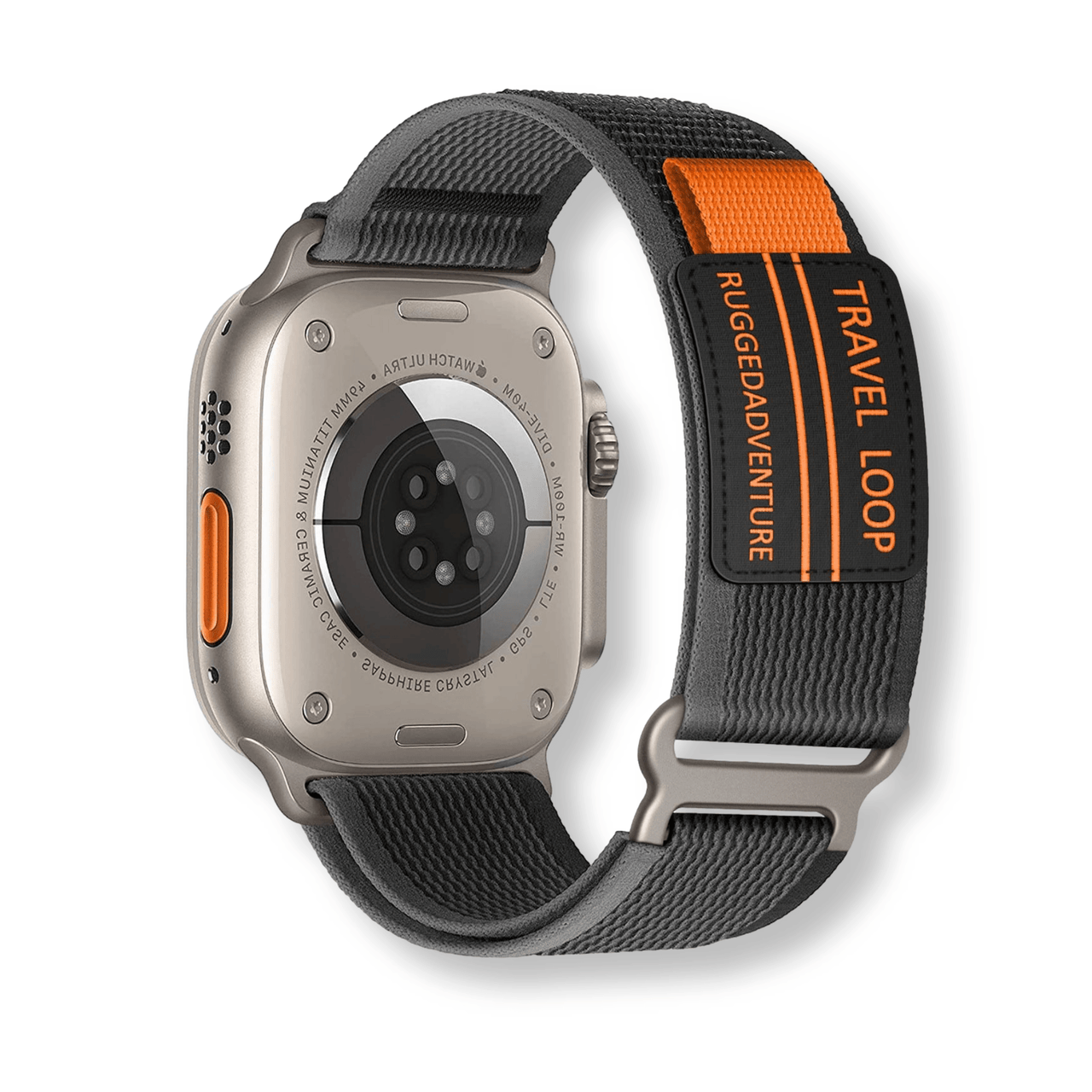
The Apple Watch does not have traditional lugs. Instead, it uses a proprietary slot system. To use a standard watch band, you must use an adapter that slides into the watch case. Apple Watch sizes are typically referred to by their case height (e.g., 40mm, 41mm, 44mm, 45mm, 49mm). Generally, the smaller cases (38/40/41mm) use adapters compatible with 20mm or 22mm bands, while the larger cases (42/44/45/49mm) often use 22mm or 24mm bands. For more information, see our Apple Watch bands collection or check the Apple Watch Series 11 bands compatibility guide.
Garmin
Many Garmin models utilize a system called "QuickFit." While these are proprietary, many Garmin watches also have standard lug holes behind the QuickFit pins. Common Garmin lug widths are 20mm, 22mm, and 26mm. This guide focuses on the 16-24mm range, which covers the vast majority of Garmin's lifestyle and mid-sized sports watches. You can find compatible options in our Garmin watch bands section.
Samsung and Fitbit
Modern Samsung Galaxy Watches, such as the Watch 4, 5, and 6, have largely moved to standard 20mm lug widths, making them very easy to customize with aftermarket straps. Older models may vary. Fitbit devices often use proprietary connectors, especially the Charge and Versa series, though adapters are available for many models to convert them to standard widths. Explore all watchbands when you need to compare model-specific options across smartwatch and traditional-watch families.
Material and Clasp Choices by Size
The size of your watch band often influences the best material choice. Smaller sizes like 16mm and 18mm are frequently paired with leather to maintain a slim, elegant profile. Larger sizes like 22mm and 24mm often benefit from the added structure of stainless steel or heavy-duty rubber.
Leather
Leather is the most versatile material and is available in every size from 16mm to 24mm. It conforms to the wrist over time and is suitable for almost any occasion. Browse our leather watch bands straps for a variety of finishes and colors.
Stainless Steel
Stainless steel is the choice for durability. It is especially popular in 20mm and 22mm for dive watches. Steel bracelets can be heavy, so ensuring a correct fit is vital to prevent the watch from sliding. Explore stainless steel watch bands for metal options.
Rubber and Silicone
For athletes and divers, rubber is the ideal material. It is waterproof, sweat-resistant, and highly durable. It is most common in 20mm, 22mm, and 24mm sizes. View our rubber silicone watch bands for high-performance options.
Nylon and Zulu
Nylon straps, including Zulu styles, are popular for their "military" look and extreme comfort. They are often used on field watches and divers. These are widely available in 18mm, 20mm, and 22mm. Check out nylon straps zulu straps for a rugged alternative.
Frequently Asked Questions
Can I use a 20mm band on a 19mm watch?
It is not recommended. While you might be able to squeeze a soft 20mm leather or silicone band into 19mm lugs, it will cause the strap to bulge and put unnecessary pressure on the spring bars. For metal bracelets, it is physically impossible. It is always best to buy the exact size required for your watch.
How do I know if my watch uses "Quick Release" bands?
A quick release band has a small lever on the underside of the strap near the lugs. If your current band has this, you can replace it with any other quick release band of the same width. If your watch has standard spring bars, you can still use quick release bands as long as the width matches your lugs.
Does the case size (e.g., 42mm) tell me the band size?
No. The case size refers to the diameter of the watch body. While there is a general correlation (larger watches usually have wider lugs), there is no universal rule. A 42mm watch could have 20mm, 21mm, or 22mm lugs. You must measure the lug width specifically.
What is the most common watch band size?
For modern men's watches, 20mm is the most common size, followed closely by 22mm. For vintage men's watches, 18mm is the most prevalent. For women's watches, sizes typically range from 12mm to 16mm.
Are odd-sized bands (19mm, 21mm) harder to find?
They are less common than even-sized bands, but they are readily available from specialized retailers. Because many luxury brands use these sizes, there is a healthy market for high-quality 19mm and 21mm replacements in leather, steel, and nylon.
📌 Complete Guide
For the full guide, see our Fitbit Watch Bands Complete Guide.
📌 Complete Guide
For the full guide, see our Stainless Steel Watch Bands Complete Guide 2026.