Garmin Model and Strap Family Guide
For current shopping, use the Garmin Watch Bands collection as the canonical Garmin collection hub. Per-model Shopify collections are not live yet, so this pillar links to model-specific compatibility articles and keeps all collection links on existing handles.
- Garmin Fenix Watch Bands: Complete Compatibility & Sizing Guide (2026)
- Garmin Forerunner 265 Bands: Complete Compatibility & Size Guide 2026
- Garmin Forerunner 955 & 965 Bands: Complete Guide to Compatible Straps
- Garmin Forerunner 945 Bands: Compatible Straps & Quick-Fit Guide
- Garmin Forerunner Watch Bands: Compatibility & Size Guide (2026)
- Garmin Instinct Watch Bands: Complete Compatibility & Size Guide (2026)
- Garmin Venu Watch Bands: Complete Guide to Replacement Straps & Accessories (2026)
- Garmin Venu Watch Bands: The Ultimate Size, Material & Style Guide (2026)
- Best Garmin Fitness Tracker Bands: Compatibility Guide
Garmin Fenix, Forerunner, Venu, Vivoactive and Instinct families can use different widths and different attachment styles. Confirm the model family first before choosing silicone, nylon, leather or stainless steel.
Swapping out your garmin watch strap is one of the easiest and most effective ways to customize your device. It allows you to transition seamlessly from a sweaty gym session to a corporate boardroom, or from a rugged mountain trail to an elegant evening dinner. But with a vast ecosystem of watches—ranging from the sleek Venu 3 to the robust Fenix 8 and the tactical Instinct 2—navigating Garmin’s proprietary QuickFit and standard Quick Release systems can be incredibly confusing.
In this comprehensive, SEO-optimized pillar page for 2026, we will dive deep into everything you need to know about Garmin watch bands. We will cover the critical reasons why selecting the right strap is essential for both your skin health and the watch's biometric accuracy. We will provide an exhaustive compatibility and sizing guide featuring the latest 2026 models, a detailed breakdown of strap materials, our top product recommendations, and a step-by-step tutorial on how to change your band. By the end of this guide, you will be fully equipped to upgrade your wrist game.
Key Takeaways
- Not Universal: Garmin bands are not universally interchangeable; compatibility depends entirely on your specific model family and lug width.
- Connector Styles: Garmin devices utilize either the proprietary, tool-free QuickFit system (common on Fenix and Instinct) or standard Quick Release pins (common on Venu and Vivoactive).
- Sizing Framework: QuickFit straps typically come in three specific widths: 20mm, 22mm, and 26mm.
- Sensor Performance: A properly fitted, micro-adjustable strap is vital for keeping the Elevate optical sensors flush against your skin for reliable biometric tracking.
Are Garmin watch bands interchangeable? The short answer is no—they are not universally interchangeable across all models. To find the correct Garmin replacement straps, you must identify your specific device\'s Garmin band size and connection mechanism, which differ significantly between heavy-duty Garmin QuickFit bands and standard quick-release designs.
Choosing a precise fit ensures both your comfort and the accuracy of your smartwatch\'s optical heart rate sensors. Discover our premium curation of rugged, comfortable, and highly adjustable Garmin watch bands to upgrade your wrist game for work, workouts, and outdoor adventures.
Overview - Why Garmin Watch Bands Need Proper Selection
It is easy to view a garmin watch band as a mere accessory—a simple piece of silicone or leather designed to keep a piece of technology attached to your wrist. However, in the realm of advanced fitness wearables, the strap plays a foundational role in the overall functionality, comfort, and longevity of the device. Choosing the correct garmin watch strap is not just a matter of fashion; it is a matter of performance.
1. Biometric Sensor Accuracy
Modern Garmin watches are packed with highly sensitive biometric sensors. Devices like the Fenix 8, Epix Pro, and Forerunner 965 utilize Garmin’s advanced Elevate optical heart rate sensors to track your pulse, heart rate variability (HRV), blood oxygen saturation (Pulse Ox), and stress levels. For these sensors to function accurately, the watch must maintain consistent, secure contact with your skin without being overly tight.
If your garmin watch strap is too loose, ambient light can leak into the sensor area, causing erratic and inaccurate heart rate spikes during a run or workout. Conversely, if the band is too tight, it can restrict blood flow, which also skews the biometric readings and causes severe discomfort. Selecting a highly adjustable band—such as a micro-adjustable nylon loop or a finely tailored silicone strap—ensures the perfect fit required for flawless data tracking.
2. Skin Health and Breathability
Garmin users are notorious for wearing their watches 24/7. From tracking intense daytime workouts to monitoring sleep stages and recovery metrics overnight, the watch rarely leaves the wrist. Wearing a non-breathable or low-quality strap for extended periods can lead to a condition commonly known as "watch rash" or contact dermatitis.
Moisture from sweat, trapped soap from the shower, and friction can quickly irritate the skin. Selecting the right material for your specific use case is critical. For instance, if you are prone to skin irritation during heavy sweating, upgrading from a standard solid band to a perforated, breathable silicone watch band can make a world of difference. Proper material selection allows your skin to breathe and prevents the buildup of bacteria.
3. Durability and Security in Extreme Environments
Garmin watches are built to military standards (MIL-STD-810), designed to withstand thermal shock, freezing temperatures, and deep-water submersion. Your garmin watch band needs to be equally resilient. If you are rock climbing, mountain biking, or participating in a Spartan race, a weak clasp or a fragile pin could result in the loss of a $1,000+ smartwatch.
High-quality aftermarket and replacement bands utilize reinforced stainless steel or titanium hardware, robust QuickFit mechanisms, and tear-resistant materials like ballistic nylon or high-tensile silicone. Choosing a strap engineered for durability ensures that your investment remains securely fastened to your wrist, no matter how extreme the adventure gets.
4. Aesthetic Versatility
Gone are the days when fitness trackers looked like bulky, utilitarian pieces of plastic. The latest Garmin models, such as the Epix Pro and Fenix 8, feature stunning AMOLED displays, titanium bezels, and sapphire crystal lenses. They are luxury timepieces in their own right. Wearing a sweat-stained rubber strap to a formal event or a business meeting detracts from the watch's premium aesthetic.
By building a collection of different garmin watch straps, you unlock the ability to match your watch to your wardrobe. A rugged NATO strap for the weekend, a breathable sport loop for the gym, and a sophisticated stainless steel or genuine leather band for the office.
Compatibility and Sizing Guide
The most confusing aspect of buying a new garmin watch band is understanding Garmin's sizing ecosystem. Unlike some smartwatch brands that use a universal connector across all devices, Garmin utilizes a variety of connection types and widths depending on the specific watch model and its intended use case.
The two primary connection types you will encounter are:
- QuickFit: Garmin’s proprietary, heavy-duty connection system. It features a spring-loaded latch on the band itself that snaps directly onto the watch's fixed metal bars. It is incredibly secure and allows for tool-free band changes in literally two seconds. QuickFit bands come in three distinct widths: 20mm, 22mm, and 26mm.
- Quick Release: The industry-standard watch band connection. These bands feature a small metal pin with a tiny lever that you pull back to insert or remove the band from the watch lugs. While not as robust as QuickFit, it is widely used on Garmin's lighter, lifestyle-focused watches. Standard widths include 18mm, 20mm, and 22mm.
Below is the definitive 2026 compatibility matrix for Garmin’s most popular current-generation smartwatches.
Garmin Watch Band Size Chart (2026 Models)
| Garmin Watch Model | Band Type | Band Width / Size |
|---|---|---|
| Fenix 8 (43mm) | QuickFit | 20mm |
| Fenix 8 (47mm) | QuickFit | 22mm |
| Fenix 8 (51mm) | QuickFit | 26mm |
| Epix Pro (42mm) | QuickFit | 20mm |
| Epix Pro (47mm) | QuickFit | 22mm |
| Epix Pro (51mm) | QuickFit | 26mm |
| Forerunner 965 | Quick Release (QuickFit Compatible) | 22mm |
| Forerunner 265 | Quick Release | 22mm |
| Forerunner 265S | Quick Release | 18mm |
| Forerunner 165 | Quick Release | 20mm |
| Venu 3 | Quick Release | 22mm |
| Venu 3S | Quick Release | 18mm |
| Instinct 2S | QuickFit | 20mm |
| Instinct 2 | QuickFit | 22mm |
| Instinct 2X Solar | QuickFit | 26mm |
Deep Dive: Understanding Your Watch's Needs
Let's break down the specific requirements and best practices for outfitting these popular Garmin families with the perfect garmin watch strap.
The Fenix 8 and Epix Pro Series
The Fenix and Epix lines represent the pinnacle of Garmin’s outdoor and multisport engineering. Because these watches are designed for rugged outdoor use, they exclusively utilize the proprietary QuickFit system. The size of the band correlates directly with the physical diameter of the watch case. The smaller 42mm/43mm models require a 20mm QuickFit band. The standard 47mm models require a 22mm QuickFit band. The massive, battery-behemoth 51mm models require the extra-wide 26mm QuickFit band. When buying a band for these models, ensure the latching mechanism is made of durable metal (preferably stainless steel or titanium) to handle the weight of the watch head.
The Forerunner Series (965, 265, 165)
Garmin's Forerunner series is meticulously crafted for runners and triathletes. Weight reduction is the primary goal here. Therefore, most Forerunner models utilize the lighter standard Quick Release pin system. The Forerunner 965 is unique; while it comes with a 22mm Quick Release band, its lug design actually allows it to accept 22mm QuickFit bands as well, giving users the best of both worlds. The Forerunner 265 uses a standard 22mm pin, while the smaller 265S uses an 18mm pin. The entry-level Forerunner 165 sits in the middle with a 20mm Quick Release pin. For these watches, lightweight sport loops and perforated silicone bands are highly recommended to maximize comfort during high-cadence arm swings.
The Venu 3 Series
The Venu line is Garmin’s answer to the mainstream lifestyle smartwatch, competing directly with the Apple Watch. It features a sleek design, voice functionality, and a beautiful AMOLED screen. The Venu 3 uses a standard 22mm Quick Release band, while the smaller Venu 3S uses an 18mm Quick Release band. Because this watch is often worn in casual, professional, and light-fitness settings, Venu owners benefit greatly from having a diverse collection of bands, including elegant leather or Milanese metal loops for daily wear, and a standard silicone band for the gym.
The Instinct 2 Series
The Instinct series is the G-Shock of the smartwatch world. It is unapologetically rugged, utilitarian, and virtually indestructible. Like the Fenix series, the Instinct relies heavily on the QuickFit system for maximum security. The Instinct 2S takes a 20mm QuickFit, the standard Instinct 2 takes a 22mm QuickFit, and the massive Instinct 2X Solar requires a 26mm QuickFit. Given the tactical nature of this watch, heavy-duty NATO nylon straps and thick, ruggedized silicone bands are the most popular and appropriate choices.
Materials Guide: Choosing the Right Garmin Watch Strap
Knowing your size is only half the battle. The material of your garmin watch band dictates how it will perform in various environments, how it feels against your skin, and how it complements your personal style. Here is a comprehensive breakdown of the five primary materials available on the market today.
1. Silicone and Fluoroelastomer
Silicone is the undisputed champion of the fitness world. Almost all Garmin watches ship with a silicone band by default, and for good reason. High-quality silicone (and its more premium cousin, fluoroelastomer) is entirely waterproof, sweat-resistant, and incredibly easy to clean. It provides a slight stretch, allowing you to get a snug fit for accurate heart rate monitoring without cutting off circulation.
Pros: Completely waterproof, easy to wash, highly durable, available in hundreds of vibrant colors, affordable.
Cons: Can look too casual for formal events; non-perforated versions can trap sweat and cause skin irritation for sensitive users.
Best For: Swimming, intense cardio, muddy obstacle courses, and everyday gym use.
Explore our vast collection of silicone watch bands to find your perfect workout companion.
2. Genuine Leather
When you need to transition your Garmin from the trail to the boardroom, nothing beats the classic sophistication of a leather strap. Leather completely transforms the look of a rugged GPS watch, giving it the refined appearance of a traditional mechanical timepiece. Top-grain and full-grain leathers develop a beautiful patina over time, molding to the specific shape of your wrist for a custom fit.
Pros: Professional, elegant, highly comfortable once broken in, ages beautifully.
Cons: Not water-resistant, will degrade quickly if exposed to heavy sweat or submerged in water, requires occasional conditioning.
Best For: Office wear, formal events, date nights, and casual everyday use where sweating is minimal.
Upgrade your style with our premium leather watch bands.
3. Metal (Stainless Steel and Titanium)
For ultimate durability and a commanding, luxurious presence, metal bands are the top tier. Stainless steel offers a brilliant shine and incredible strength, while titanium offers the same strength at a fraction of the weight (making it ideal for larger watches like the Fenix 8 51mm). Metal bands usually feature a deployment clasp for easy on-and-off and are composed of removable links to achieve the perfect size.
Pros: Indestructible, luxurious aesthetic, waterproof, will not trap odors.
Cons: Heavier than other materials, can be cold against the skin in winter, not ideal for high-impact sports as the rigid nature can cause the heavy watch to bounce against the wrist.
Best For: Executive environments, luxury styling, and everyday wear.
Discover the ultimate in durability with our metal watch bands.
4. NATO and Woven Nylon
Originally developed for the British Ministry of Defence, NATO straps are synonymous with tactical durability. Woven nylon bands are incredibly strong, tear-resistant, and offer a rugged, military-inspired aesthetic that pairs perfectly with the Garmin Instinct and Tactix series. They are highly breathable and can be easily washed in the laundry.
Pros: Extreme durability, highly breathable, secure (if a pin fails, a true NATO strap keeps the watch attached to your wrist), machine washable.
Cons: Can retain water and take a while to dry after swimming; the woven texture can sometimes feel slightly rough out of the box.
Best For: Hiking, tactical operations, camping, and rugged outdoor adventures.
Gear up with our rugged nylon watch bands.
5. Sport Loop (Braided and Hook-and-Loop)
Sport loops utilize a soft, woven nylon material combined with a hook-and-loop (Velcro-style) fastening system or a continuous braided elastic design. These are arguably the most comfortable garmin watch straps available. Because they do not rely on pre-punched holes, they offer infinite micro-adjustability. You can loosen it a millimeter as your wrist swells during a run, or tighten it perfectly for sleep tracking.
Pros: Unmatched comfort, infinite adjustability, lightweight, excellent breathability, perfect for sleeping.
Cons: Velcro can wear out over years of heavy use; not as professional-looking as leather or metal.
Best For: Sleep tracking, running, ultra-endurance events, and all-day comfort.
Top Picks from Watchband.direct
Navigating the sea of aftermarket accessories can be overwhelming. At Watchband.direct, we pride ourselves on curating only the highest quality replacement bands that meet the rigorous demands of Garmin users. Here are our top 4 picks for the best garmin watch bands available in 2026.
1. The Premium QuickFit Performance Silicone Strap
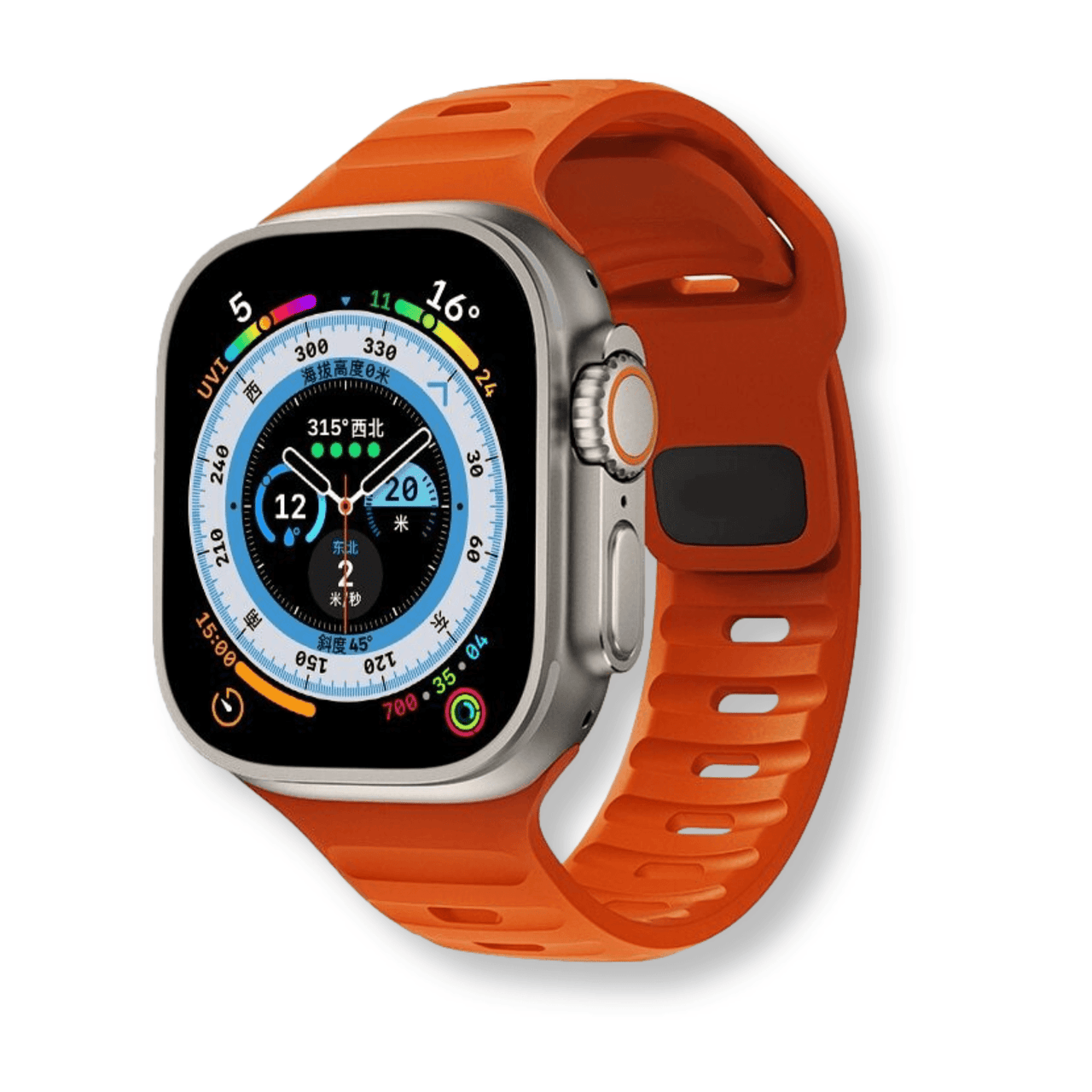
Designed specifically for the Fenix and Epix series, this is the ultimate upgrade for your daily driver. Crafted from ultra-soft, hypoallergenic fluoroelastomer, this band features a subtly textured surface that prevents it from sticking to your wrist during a sweaty workout. The QuickFit mechanism is engineered from marine-grade 316L stainless steel, ensuring a lock-tight grip on your watch lugs. Available in 20mm, 22mm, and 26mm, it is the perfect blend of athletic performance and sleek design.
Shop the Performance Silicone Strap here.
2. The Tactical Woven Nylon NATO Band
For the Instinct and Tactix users who push their gear to the absolute limit, this NATO-style nylon band is a must-have. Woven from high-tensile ballistic nylon, it is designed to resist tearing, fraying, and abrasion from rocks and brush. It features heavy-duty matte black stainless steel rings and a robust buckle. It is highly breathable, making it ideal for multi-day hiking trips where comfort and reliability are paramount.
Shop the Tactical Nylon NATO Band here.
3. The Executive Titanium Link Bracelet
If you want to transform your Garmin into a luxury timepiece that rivals traditional Swiss watches, this is the band for you. Made from pure Grade 2 Titanium, this band perfectly matches the titanium bezels of the premium Garmin models. Despite its chunky, masculine appearance, the titanium construction makes it astonishingly lightweight. It features a dual-button deployment clasp and comes with a link-removal tool for a custom fit. It is the ultimate statement piece for the modern professional.
Shop the Executive Titanium Bracelet here.
4. The Ultra-Comfort Breathable Sport Loop
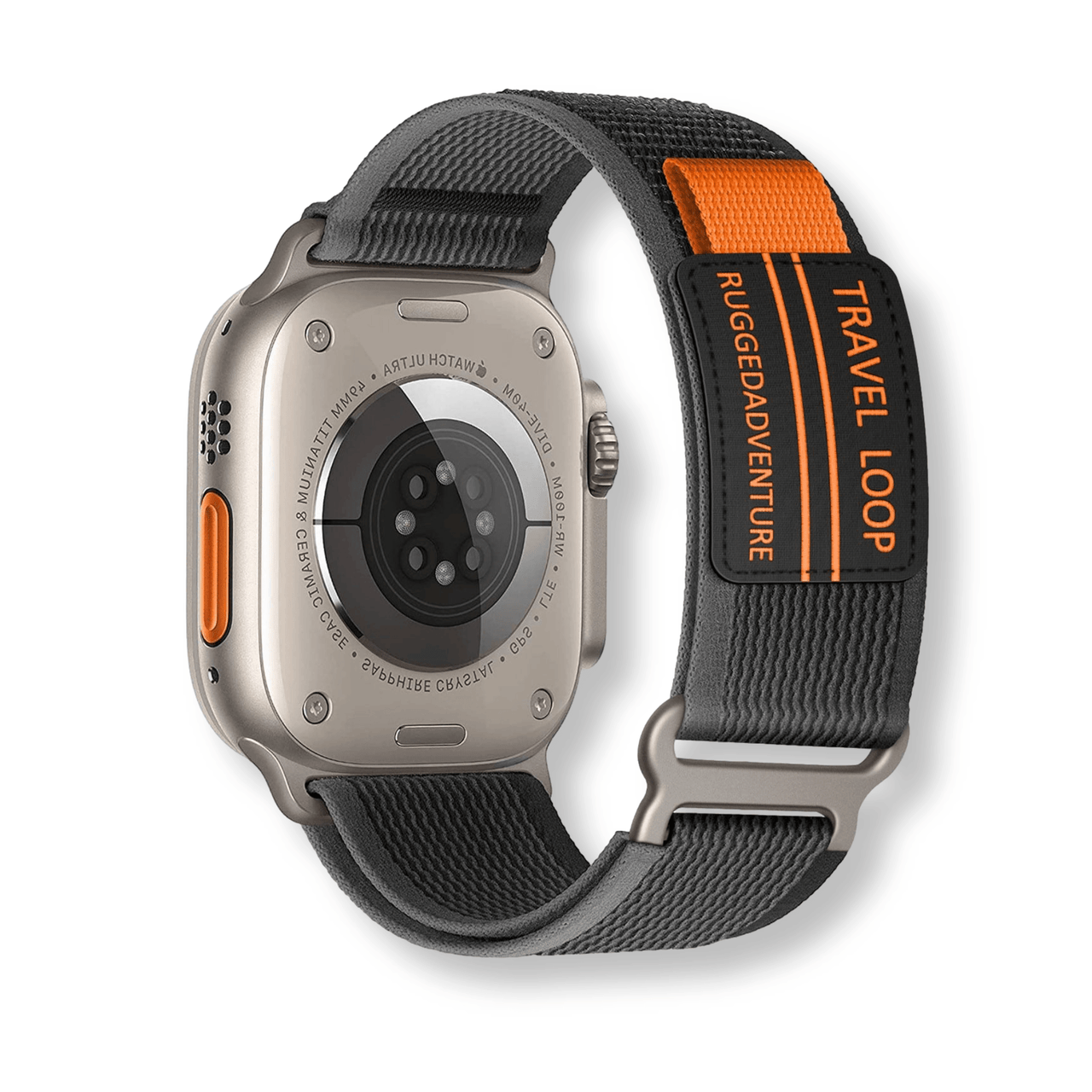
Endurance athletes and sleep-tracking enthusiasts swear by the Sport Loop. Made from a dual-layer nylon weave, this band features dense loops on the skin side that provide soft cushioning while allowing moisture to escape rapidly. The hook-and-loop fastener is securely anchored for superior durability. Because it is infinitely adjustable, you will never have to settle for a fit that is "between holes" again. It is so light and comfortable, you will forget you are wearing a watch.
Shop the Ultra-Comfort Sport Loop here.
How to Change Your Garmin Watch Band
One of the greatest advantages of the Garmin ecosystem is how user-friendly it is to customize your device. Depending on whether your watch uses the QuickFit or Quick Release system, the process takes only a few seconds to a minute. Here is your step-by-step guide to safely removing and installing your new garmin watch strap.
Changing a QuickFit Band (Fenix, Epix, Instinct)
The QuickFit system is brilliantly simple and requires absolutely no tools.
- Locate the latch: Turn your Garmin watch over so the screen is facing down on a soft surface (like a microfiber cloth) to prevent scratching. Look at where the band meets the watch body. You will see a small, spring-loaded sliding latch on the underside of the band.
- Remove the old band: Using your fingernail, pull the latch back (away from the watch body). While holding the latch back, simply pull the band straight up and away from the watch’s metal pin. Repeat on the other side.
- Clean the pin: Before installing the new band, take a moment to wipe down the fixed metal pins on the watch with a dry cloth. Dirt and sweat can accumulate here over time.
- Install the new band: Take your new QuickFit garmin watch band. You do not need to pull the latch to install it. Simply align the curved hook of the band over the watch’s metal pin and press down firmly. You will hear a distinct, satisfying "click" as the spring-loaded latch snaps securely around the pin.
- The Tug Test: Always give the new band a firm tug to ensure both sides are fully engaged and locked. You do not want to find out the band wasn't secure while halfway up a rock wall!
Changing a Quick Release Band (Forerunner, Venu, Vivoactive)
The Quick Release system utilizes a standard watch pin with a tiny, integrated lever.
- Locate the pin lever: Place the watch face down on a soft surface. Look at the underside of the band near the watch lugs. You will see a tiny metal knob or lever protruding from the band.
- Remove the old band: Using your fingernail, press the lever inward (towards the center of the band). This compresses the internal spring pin. While holding the lever in, gently pull that side of the band away from the watch lug, then slide the other end of the pin out of the opposite hole.
- Prepare the new band: Take your new Quick Release garmin watch strap. Insert the end of the pin that does not have the lever into the small hole on the inside of the watch lug.
- Secure the new band: Press the lever on the new band inward to compress the pin. Slide the band into place between the lugs, align the pin with the corresponding hole on the watch body, and release the lever. The pin will spring outward and lock into the hole.
- Test the security: Wiggle the band near the lugs to ensure both ends of the pin are firmly seated in the watch body holes.
Pro Tip: If you are upgrading a Forerunner 965 from its stock
Newest Garmin Model Band Guides
For model-specific sizing and strap recommendations, see our latest Garmin guides: Garmin Enduro 2 band guide, Garmin D2 Mach 1 strap guide, Garmin Forerunner 55 band guide, and Garmin Forerunner 255 band guide.
Related collections and buying resources
For comparison shopping and compatibility checks, explore Garmin watch bands collection NATO watch bands leather watch bands spring bar remover tool Watch Compendium hub.
📌 Complete Guide
For the full guide, see our Garmin Watch Bands Complete Guide 2026.
Garmin QuickFit System: Tool-Free Band Swapping
Garmin's QuickFit system lets you swap watch bands in seconds without any tools. A simple push-button mechanism on the back of each band releases it from the case, making it easy to switch between sport, casual, and dress styles throughout the day.
The QuickFit connector is a Garmin-proprietary standard, which means bands are not interchangeable with standard lug watches -- but within the QuickFit ecosystem, any compatible band in the right width will fit your watch perfectly.
QuickFit bands come in three main widths: 20mm QuickFit bands, 22mm QuickFit bands, and 26mm QuickFit bands. Choosing the right size is essential -- using the wrong width will prevent the band from snapping in securely.
| QuickFit Size | Compatible Series |
|---|---|
| 20mm | Forerunner 255, Vivoactive 5, Lily, smaller Venu models |
| 22mm | Fenix (older), Venu 2/3, Forerunner 965, Instinct, MARQ |
| 26mm | Fenix 7/8, Epix, Enduro, Tactix |
Compare Garmin Models
| Model | Series | QuickFit Size | Bands |
|---|---|---|---|
| Fenix 7 | Fenix | 26mm | Shop Bands |
| Fenix 8 | Fenix | 26mm | Shop Bands |
| Venu 3 | Venu | 22mm | Shop Bands |
| Venu 2 | Venu | 22mm | Shop Bands |
| Forerunner 965 | Forerunner | 22mm | Shop Bands |
| Forerunner 255 | Forerunner | 20mm | Shop Bands |
| Instinct 2 | Instinct | 22mm | Shop Bands |
| Epix | Epix | 26mm | Shop Bands |
| Vivoactive 5 | Vivoactive | 20mm | Coming soon |
| MARQ | MARQ | 22mm | Shop Bands |
| Lily | Lily | 14mm | Coming soon |