Key Takeaways:
- Safety First: Always detach the bracelet from the watch head to protect the internal movement from liquid damage.
- Simple Ingredients: Warm water, mild dish soap, and a soft-bristled toothbrush are all you need for an effective clean.
- Attention to Detail: Dirt collects inside pins and micro-adjustments; cleaning these prevents link stretch and wear.
- Know When to Replace: If your band is severely scratched, loose, or stretched, a high-quality replacement is the best path forward.
Table of Contents
- Why Regular Stainless Steel Watch Band Maintenance Matters
- Essential Tools and Prep for Deep-Cleaning at Home
- Step-by-Step Guide: How to Clean Stainless Steel Watch Bracelet
- How to Clean Stainless Steel Watch Bracelet Compatibility & Metal Grades
- How to Clean Stainless Steel Watch Bracelet Size & Link Maintenance
- When to Choose a How to Clean Stainless Steel Watch Bracelet Replacement
- Preventative Care Tips to Keep Your Metal Band Shining
- Frequently Asked Questions
Why Regular Stainless Steel Watch Band Maintenance Matters
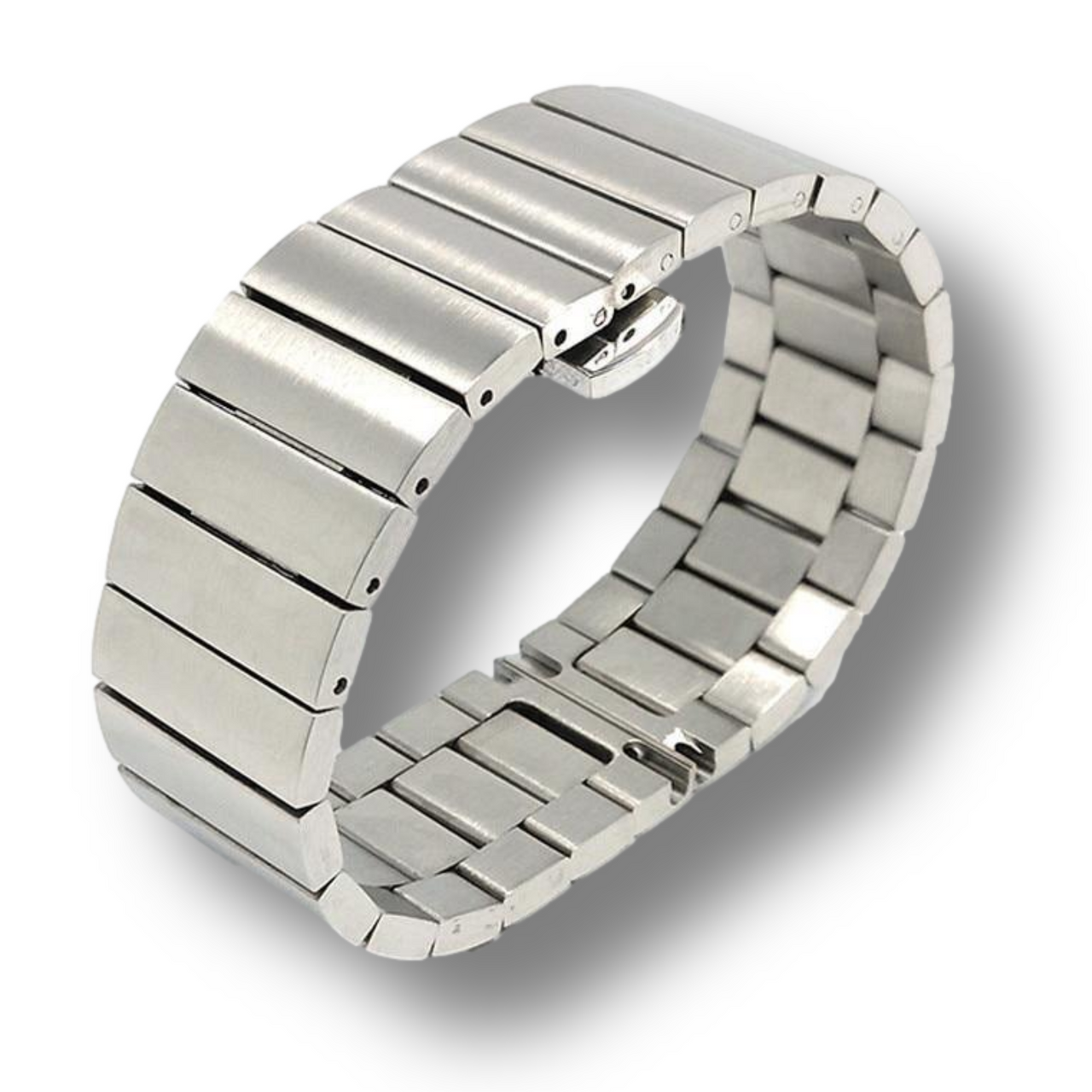
Stainless steel watch bands are beloved for their durability, classic aesthetics, and resistance to corrosion. However, because we wear them during daily activities, they inevitably collect a build-up of sweat, dead skin cells, sunscreen, oil, and dust. Over time, this mixture forms a dark grime known as "wrist cheese" that settles deep inside the tiny gaps of your metal links.
Allowing this debris to sit unchecked does more than make your watch look dull. The grit acts as an abrasive paste. Every time you move your wrist, this abrasive substance grinds away at the metal pins and friction sleeves inside the links. Eventually, this leads to structural "band stretch," which weakens the integrity of your strap. Regular cleaning keeps your wrist hygienic and preserves the structural engineering of your favorite timepieces.
By learning how to properly care for your metal bracelet, you protect your investment and maintain that high-end, factory-fresh shine. In this guide, we will walk you through the ultimate home-cleaning process to restore your steel bracelet without damaging its delicate components.

Essential Tools and Prep for Deep-Cleaning at Home
Before you begin the cleaning process, you must gather the correct tools. Using harsh chemicals or abrasive materials can scratch polished surfaces or strip protective finishes from your watch band.
To safely clean your metal strap at home, prepare the following items:
- Warm Water: Lukewarm water helps break down grease and oils without causing thermal shock to watch components.
- Mild Dish Soap: A basic, non-moisturizing dish soap (like blue Dawn) is ideal because it is formulated to cut through grease without leaving oily residues.
- Soft-Bristled Toothbrush: Use a baby toothbrush or an extra-soft option. Hard bristles can leave micro-scratches on polished center links.
- Microfiber Cloths: Essential for drying and buffing your bracelet to a mirror finish without lint.
- Spring Bar Tool: Removing your bracelet is highly recommended. To do this safely, use a specialized watch spring bar remover to pop out the pins without slipping and scratching the lugs.
If you prefer a comprehensive approach to maintaining your collection, investing in a complete watch repair tool kit is highly beneficial. Having access to professional-grade link pin removers, spring bar tools, and tweezers ensures you can disassemble, clean, and reassemble your timepiece safely without paying jeweler fees.
Step-by-Step Guide: How to Clean Stainless Steel Watch Bracelet Safely
Ready to restore your bracelet's shine? Follow this step-by-step method on how to clean stainless steel watch bracelet assemblies to achieve professional-grade results at home.
Step 1: Remove the Bracelet from the Watch Head
Never submerge an entire watch in soapy water, even if it has a high water-resistance rating. Gaskets degrade over time, and soapy water can penetrate seals more easily than fresh water. Use your spring bar remover to separate the strap from the case.
Step 2: Prepare the Soapy Bath
Fill a small bowl with lukewarm water and add a few drops of mild dish soap. Mix gently until soapy suds form. Place the metal bracelet into the bowl and let it soak for 10 to 15 minutes. This softens hardened dirt and oils stuck inside the links.
Step 3: Scrub Gently
Take your extra-soft toothbrush and dip it into the soapy water. Gently brush the bracelet, paying close attention to the clasp mechanism, the inner surface of the links, and the hard-to-reach crevices. Work in circular motions to dislodge deep grit.

Step 4: Rinse Thoroughly
Rinse the bracelet under clean, warm running water. Ensure all soap residue is completely washed away, as dried soap can attract new dust and make the metal look cloudy.
Step 5: Dry and Buff
Pat the bracelet dry with a clean microfiber cloth. Shake the band gently to force out any trapped water droplets between the links. Let the bracelet air-dry on a dry towel for an hour before reattaching it to your watch case.
How to Clean Stainless Steel Watch Bracelet Compatibility & Metal Grades
When studying how to clean stainless steel watch bracelet compatibility, you must understand that not all stainless steel bands are manufactured exactly the same. Different grades of metal react differently to cleaning agents and environmental exposures.
Most luxury and modern sports watches use 316L stainless steel, while brands like Rolex utilize 904L steel. Both alloys are highly resistant to rust and corrosion, making them highly compatible with water-based cleaning methods. However, cheaper steel alloys or plated metals can degrade if exposed to acidic solutions or ultrasonic cleaners.
If your bracelet features a gold-plated center link or a PVD coating, you must skip aggressive scrubbing. Harsh scrubbing can wear down thin gold plating over time, exposing the raw steel underneath. For an in-depth look at different steel types, construction styles, and compatibility with different watch brands, explore our complete guide to stainless steel watch bands.
How to Clean Stainless Steel Watch Bracelet Size & Link Maintenance
When looking up how to clean stainless steel watch bracelet size adjustments, you must consider the internal pins, screws, and micro-adjustments. A clean bracelet is easier to resize and adjust because dirt won't jam the moving parts.
Over time, sweat and grime can literally cement sizing pins and screws inside their chambers. If you attempt to resize a dirty bracelet, you run a high risk of stripping the screw heads or bending the push pins. Deep-cleaning the bracelet first softens this debris, allowing you to push or screw out pins with ease.
To clean these hard-to-reach sizing areas, flex the bracelet back and forth while submerged in soapy water. This mechanical movement helps flush out trapped dirt inside the sizing links. If you need to remove links to adjust the size, clean the individual pieces while they are disassembled for the most thorough maintenance possible.

When to Choose a How to Clean Stainless Steel Watch Bracelet Replacement
While deep-cleaning can work wonders, there comes a point where a metal band is beyond saving. Understanding when to opt for a how to clean stainless steel watch bracelet replacement will protect your watch head from falling off your wrist and getting lost or damaged.
If your bracelet suffers from "stretch"—which is actually the wearing down of the metal pins inside the links—the band will feel floppy and loose. This structural wear cannot be cleaned away or repaired easily. In these cases, swapping your worn strap for a fresh replacement is the safest option.
At watchband.direct, we offer a massive selection of premium metal bands to suit any lifestyle. Check out our curated collection of stainless steel watch bands to find a durable, stylish match for your favorite timepiece. If you prefer a sporty or modern look, we also carry high-quality Apple Watch bands engineered to seamlessly fit your smartwatch with maximum comfort.
Preventative Care Tips to Keep Your Metal Band Shining
To avoid having to perform heavy deep-cleans constantly, practicing regular preventative care is key. A few seconds of maintenance after wearing your watch can keep it shining for years.
Here are some expert preventative tips:
- The Daily Wipe Down: At the end of the day, wipe the underside of your watch band with a dry microfiber cloth to remove sweat and skin oils before they can harden.
- Avoid Direct Chemical Exposure: Apply colognes, perfumes, hairsprays, and sunscreens first, let them dry completely, and then put your watch on.
- Rinse After Saltwater: If you wear your watch in the ocean or a swimming pool, always rinse it thoroughly with fresh tap water immediately afterward to wash away corrosive salt and chlorine.
- Store Safely: Keep your watches stored in a dry, dust-free environment. Explore our selection of watch accessories for protective storage pouches and cases that keep your collection safe from humidity and scratches.
By integrating these simple habits into your routine, you extend the lifespan of your bracelets and keep them looking immaculate between deep-cleans.

Frequently Asked Questions
Can I clean a stainless steel watch bracelet with vinegar?
It is best to avoid vinegar. Vinegar is highly acidic and can damage protective coatings, rubber gaskets, or plating on your watch bracelet over time. Stick to pH-neutral, mild dish soap and warm water for safe, highly effective results.
Is it safe to use an ultrasonic cleaner for my watch band?
Yes, ultrasonic cleaners are excellent for removing deep-seated dirt from stainless steel bracelets. However, you must *only* place the detached bracelet in the cleaner. Never place the actual watch head inside an ultrasonic machine, as the high-frequency vibrations can destroy the delicate internal gears and movement.
How often should I clean my metal watch band?
For daily wear, a quick wipe down with a microfiber cloth should be done daily. A deeper wet clean with warm soapy water and a soft toothbrush is recommended once every month or two, depending on how much you sweat and the environment you work in.
Can I use baking soda to polish away scratches?
Baking soda is a mild abrasive and can be used to clean steel, but we do not recommend using it to polish out scratches. It can easily ruin brushed finishes by making them look unevenly shiny. For scratch removal, use specialized polishing cloths designed specifically for watch metal.
What should I do if my watch band has a mix of steel and leather?
If your strap has leather components, do not submerge it in water at all. Water dries out leather, causing it to crack and rot. For mixed straps, clean the metal parts carefully with a damp cloth and treat the leather with specialized leather cleaner. Or, browse our premium leather watch bands and straps to find a dedicated classic leather style.
Find Your Next Watch Band Style
Keeping your watch bands clean and well-maintained is a great way to respect your horological collection. But when your band has seen better days, or you simply want to switch up your aesthetic, a fresh strap is the easiest way to make an old watch feel brand-new.
Beyond our metal collections, we offer a wide range of rugged, stylish options. If you love a military or tactical look, browse our ultra-durable NATO watch straps designed to withstand the toughest outdoor adventures. No matter your style preference, we have the perfect fit for your wrist.
Want to learn more about styling, sizing, and watch care? Head over to our Watch Compendium for expert guides, styling tips, and everything you need to know to level up your watch game today!
📌 Complete Guide
For the full guide, see our Stainless Steel.
📌 Complete Guide
For the full guide, see our Stainless Steel.