Key Takeaways:
- Style & Occasion: Leather offers timeless, formal elegance, while rubber provides a sporty, modern aesthetic.
- Durability: Rubber is completely waterproof and resistant to sweat, whereas leather requires care to avoid moisture damage.
- Comfort & Fit: Leather molds to the shape of your wrist over time, while rubber offers instant flexibility and grip.
- Versatility: Swapping between both materials is simple and drastically changes your watch's overall appearance.
Table of Contents
- 1. Introduction to the Leather vs Rubber Debate
- 2. Leather Watch Straps: Classic Elegance and Sophistication
- 3. Rubber Watch Straps: Modern Durability and Active Utility
- 4. Leather vs Rubber Watch Strap Compatibility
- 5. Leather vs Rubber Watch Strap Size and Fit
- 6. Leather vs Rubber Watch Strap Replacement: How to Swap
- 7. The Verdict: When to Choose Leather vs Rubber
- 8. Frequently Asked Questions
1. Introduction to the Leather vs Rubber Debate
Choosing the right watch band is one of the quickest ways to change how a timepiece feels, wears, and fits into your daily routine. For decades, the choice has often come down to a classic showdown: the timeless aesthetic of leather versus the high-performance utility of rubber. While both styles serve distinct purposes, modern watch culture has blurred the lines, seeing luxury dive watches paired with leather and elegant dress watches paired with integrated rubber options.
Deciding between a leather vs rubber watch strap requires analyzing your lifestyle, environment, and personal aesthetic. A luxury leather strap brings sophistication to a boardroom, while a high-grade rubber strap withstands the sweat of a morning workout. Understanding the core properties of these materials ensures your watch remains both comfortable and protected throughout the day.
2. Leather Watch Straps: Classic Elegance and Sophistication
There is an undeniable charm to a high-quality leather strap. For centuries, leather has been the default choice for fine horology, offering an organic texture, rich aroma, and an elegant appearance that synthetic materials simply cannot replicate. From rugged calfskin to exotic patterns, a leather band elevates a watch from a mere tool to an artistic statement.
If you prefer a refined, traditional style, exploring leather watch bands straps is the logical first step. Leather possesses a unique characteristic known as patina. Over months and years of continuous wear, the natural oils from your skin and exposure to the elements will darken and soften the leather. This creates a custom-molded strap that is completely unique to your wrist.
For formal events, weddings, and executive environments, nothing compares to the look of premium leather. You can opt for specialized textures, such as those found in our alligator and crocodile watch bands collection, to add a distinct layer of depth and luxury to your favorite dress watch. However, keep in mind that leather is susceptible to water damage, sweat, and humidity, meaning it requires routine care to maintain its longevity.

3. Rubber Watch Straps: Modern Durability and Active Utility
On the other end of the spectrum is the rubber watch strap. Once dismissed as a cheap plastic alternative, modern elastomer compounds, silicone, and FKM (fluoroelastomer) rubber have completely revolutionized the luxury watch industry. High-grade rubber is incredibly supple, highly resistant to tearing, UV rays, and temperature extremes.
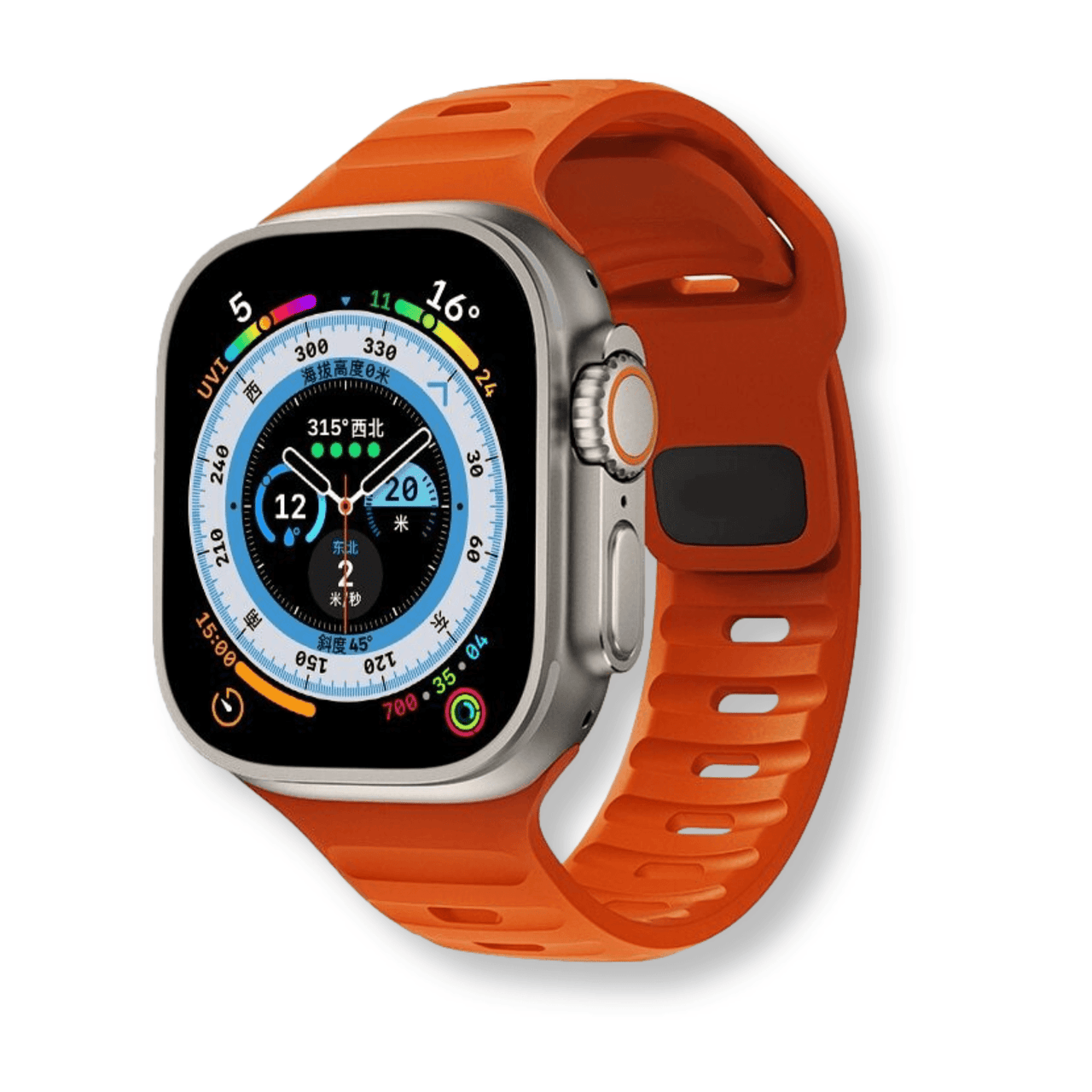
Rubber straps are the ultimate companions for active individuals, travelers, and divers. Unlike leather, which absorbs sweat and moisture, rubber repels liquids entirely. If you get mud, sand, or saltwater on a rubber strap, a quick rinse under the tap restores it to pristine condition. This makes it a popular everyday choice for smartwatches, including our specialized Apple Watch bands, where durability and biometric tracking demand a secure, sweat-proof fit.
Furthermore, rubber straps come in a vast array of vibrant colors, patterns, and designs. Whether you want a stealthy matte black strap for a military-style field watch or a bright orange band for a summer diver, rubber provides unmatched design versatility without sacrificing comfort.
4. Leather vs Rubber Watch Strap Compatibility
When considering a new strap, assessing leather vs rubber watch strap compatibility with your existing timepiece is essential. Not all watch heads pair seamlessly with every strap material. The primary factor in compatibility is the watch case design, particularly the lug width and the overall aesthetic of the dial.
Traditional dress watches and vintage chronographs generally feature slim cases and elegant lines that naturally harmonize with leather. Trying to fit a thick, aggressive rubber strap onto a thin vintage dress watch can look disjointed. Conversely, chunky dive watches and rugged field watches have the visual weight to carry beefy rubber straps easily. To explore how different materials match various watch styles, read our comprehensive leather watch bands guide.
Additionally, modern watch cases may feature straight lugs, which accept standard straight-end straps, or curved lugs that require integrated straps. Always check whether your watch requires a generic fit or an integrated design before finalizing your choice.

5. Leather vs Rubber Watch Strap Size and Fit
Achieving a secure fit is crucial for comfort and preventing your watch from sliding around your wrist. When looking at leather vs rubber watch strap size, the two materials behave very differently upon first wear.
Leather straps require a break-in period. When brand new, high-quality leather can feel stiff and unyielding. However, within a week or two, the heat and moisture of your wrist will soften the fibers, allowing the band to conform perfectly to your anatomy. Leather straps typically feature pre-punched holes and a metal buckle for traditional sizing adjustments.
Rubber straps, on the other hand, offer instant flexibility straight out of the box. They grip the skin slightly, which prevents the watch head from shifting—a great feature for top-heavy timepieces. Because rubber does not stretch, finding a strap with precise micro-adjustment options or closely spaced buckle holes is important. To ensure a perfect installation, keeping quality spring bars and tools from our watch accessories collection on hand will help you dial in the exact fit.

6. Leather vs Rubber Watch Strap Replacement: How to Swap
One of the joys of watch ownership is the ability to swap straps to match your outfit or activity. Managing a leather vs rubber watch strap replacement is a straightforward process that you can easily do at home with the correct tools.
Most modern watch straps utilize either traditional spring bars or quick-release mechanisms. Quick-release straps feature a tiny built-in lever, allowing you to install or remove the band in seconds without any tools. However, if your favorite strap uses traditional spring bars, you will need a dedicated tool to retract the pin from the watch lugs.
We highly recommend using a premium watch spring bar remover to prevent scratching your watch casing during the swap. For beginners and seasoned collectors alike, having a complete watch repair tool kit ensures you have the tweezers, spring bars, and magnifying lenses necessary to execute a flawless strap replacement without a trip to the local jeweler.

7. The Verdict: When to Choose Leather vs Rubber
To help you decide which material is best for your current rotation, we have summarized the ideal use cases for both leather and rubber watch straps:
| Feature | Leather Strap | Rubber Strap |
|---|---|---|
| Best For | Formal wear, office, smart-casual settings | Sports, swimming, outdoor adventures, daily beaters |
| Water Resistance | Poor (water can stain or degrade the leather) | Excellent (100% waterproof and sweatproof) |
| Break-In Period | Required (molds to your wrist over time) | None (flexible and ready immediately) |
| Aesthetic | Classic, sophisticated, warm, vintage | Sporty, modern, rugged, utilitarian |
Ultimately, you do not have to limit yourself to just one. Keeping both a high-quality leather strap and a durable rubber strap in your collection allows you to quickly adapt your favorite timepiece for any adventure, from formal dinners to weekend hikes.
8. Frequently Asked Questions
Can you get a leather watch strap wet?
While minor splashes from handwashing are usually fine, you should avoid submerging leather straps in water. Moisture can cause the leather to dry out, warp, crack, and develop unpleasant odors over time.
How long do rubber watch straps last?
High-quality rubber straps made from silicone or FKM rubber can easily last several years with minimal maintenance. They do not dry rot like cheap plastics and are highly resistant to cracking under UV exposure.
Which strap is more comfortable for daily wear?
Comfort is subjective. Leather is warm and molds to your wrist shape, making it incredibly comfortable once broken in. Rubber is highly flexible and lightweight, making it more comfortable during active physical movements.
Do rubber watch straps make your wrist sweat?
Because rubber is non-porous, it does not absorb sweat. Some wearers may notice sweat buildup underneath the strap during hot days. To mitigate this, look for rubber straps featuring textured inner channels that promote airflow.
Is it easy to change a watch strap by myself?
Yes, absolutely. With a simple spring bar removal tool or quick-release spring bars, you can easily change your watch strap at home in less than five minutes.
Ready to Elevate Your Timepiece?
Explore our vast collection of premium straps and accessories designed to give your watch a brand-new identity. Visit the Watch Compendium for more expert guides, style tips, and maintenance tutorials.
Related Watch Band Guides
📌 Complete Guide
For the full guide, see our Silicone Watch Bands Complete Guide.